The Alternative for Germany (AfD) has secured a historic victory in the Saxony-Anhalt state election, winning 43% of the vote on Sunday and positioning itself to form the first far-right-led regional government in Germany since the Second World War. Chancellor Friedrich Merz's Christian Democratic Union (CDU), which has governed the eastern state for 24 years, collapsed to 17%, its worst result in the region in living memory.
Speaking on Monday, Merz accepted personal responsibility for what he called a "seismic" defeat, acknowledging that his party had been shaken "to its very foundations". The chancellor, who has held office for 15 months and recently became the most unpopular in modern German polling, insisted that "giving up is not an option" and vowed to press ahead with his reform agenda, including hundreds of billions of euros in borrowing for defence and infrastructure.
A landslide built on eastern discontent
The scale of the AfD's advance reflects a deeper fracture in German politics. Saxony-Anhalt, a state of roughly 2.1 million people, has long been fertile ground for the party, but Sunday's result, a gain of more than 20 percentage points compared with the last state election, exceeds even the most pessimistic projections for the CDU. Merz's government has struggled to convince voters, particularly in the east, that its borrowing-fuelled investment plans will deliver tangible relief from stagnant wages, rising pension costs and a sluggish economy.
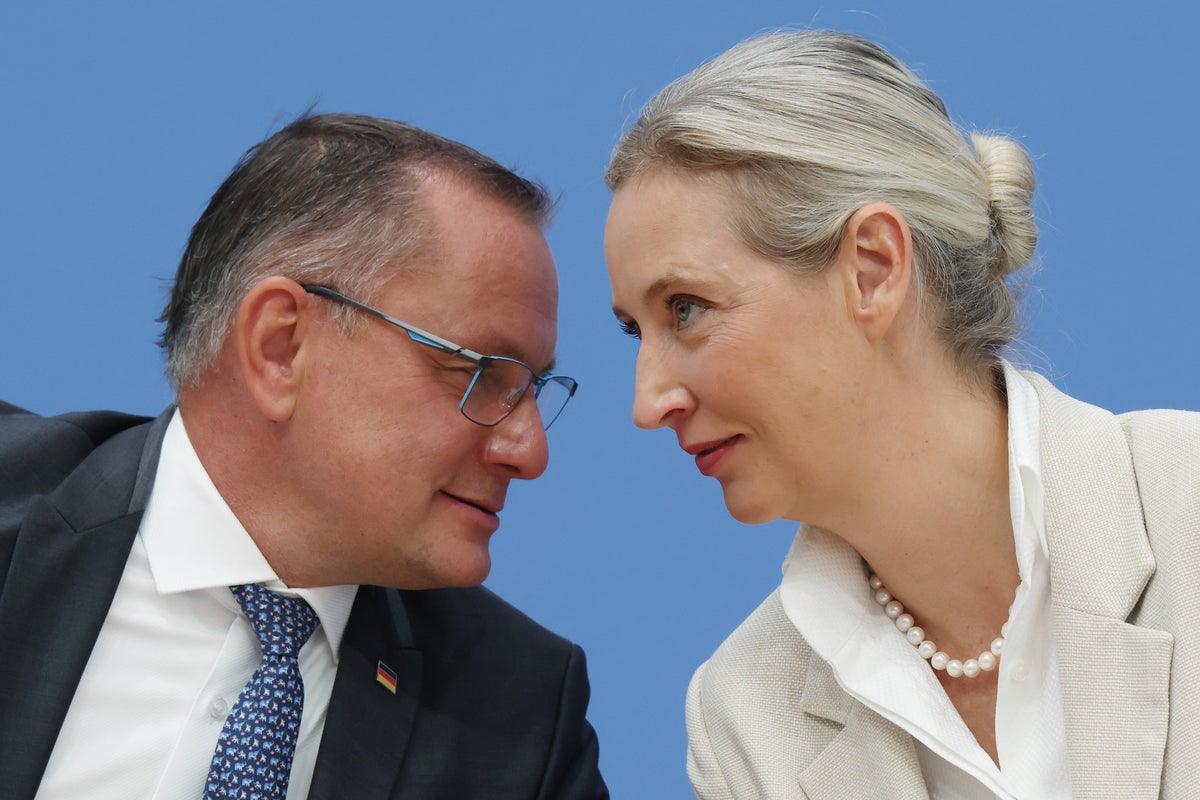
Ulrich Siegmund, the AfD's lead candidate in the state, described the outcome as "sensational" and said the party would seek to form a government "as soon as possible". At a final rally in Magdeburg on Saturday, he told supporters: "Because what we have started here in Saxony-Anhalt, that is currently sweeping across all of Germany, can no longer be stopped." The party's national co-leaders, Alice Weidel and Tino Chrupalla, echoed that language, with Weidel claiming a "clear government mandate" and Chrupalla telling broadcaster ARD that the "firewall", the long-standing agreement among mainstream parties to exclude the AfD from power, had been "definitively rejected by the voters today".
What an AfD government would do
The AfD's platform for Saxony-Anhalt goes well beyond immigration. The party plans to establish a deportation task force, place the children of refugees in separate school classes to prevent what it calls "stresses" from cultural mixing, and end inclusive education by sending disabled children to special schools. Rainbow flags would be banned from schools, and the state would "exhaust all legal avenues" to limit Islamic expression. On the international stage, the AfD seeks to restore ties with Moscow, cut support for Ukraine and withdraw Germany from the euro.
Germany's domestic intelligence service has designated the AfD as "extremist right wing", a classification that underscores the constitutional questions now facing the federal government. Merz insisted on Monday that "we have a strong constitution; we have all the tools to defend the constitution against a right-wing extremist state government", but he also conceded that "our party system is undergoing a tectonic shift".
Coalition arithmetic and the firewall
Whether the AfD can translate its plurality into a government remains uncertain. Most other parties, the SPD, Greens, Linke and FDP, have ruled out joining an AfD-led coalition. The composition of the Landtag will depend on which parties clear the 5% threshold for representation. If the CDU, SPD, Greens and Linke all enter parliament, a "Kenya coalition" of CDU, SPD and Greens could theoretically block the AfD, but the CDU's 17% makes that arithmetic precarious. The FDP and Linke are both polling near the threshold, and their presence or absence could determine whether a non-AfD majority exists.
Siegmund has ruled out coalition talks with other parties, saying migration and domestic security are "non-negotiable". Yet he also said the AfD would "extend a hand to all democratic forces that wish to pursue better policies". The contradiction reflects a party that wants the legitimacy of office without the compromises of coalition governance.
Merz's gamble and the Ukraine question
Merz came to power in 2025 promising a rupture with decades of fiscal caution. His government pushed through a constitutional amendment to allow hundreds of billions in new borrowing for the Bundeswehr and infrastructure, arguing that Germany's security and economic future demanded it. So far, voters have seen little return. Construction projects take years; defence procurement moves at a glacial pace. In the meantime, the cost of living has kept rising, and the chancellor's personal approval ratings have sunk to record lows.
On Ukraine, Merz was unequivocal: he would not deviate "even a millimeter" from support for Kyiv, despite the AfD's campaign pledge to restore ties with Moscow. The chancellor's stance aligns with the broader European consensus, but it places him at odds with a significant slice of the eastern electorate, where scepticism about sanctions and military aid runs high. The AfD's victory will embolden voices in Berlin arguing that the government's foreign policy is out of step with the domestic mood.
A watershed for post-war Germany
Political commentators described Sunday as a watershed. Das Erste, the flagship public broadcaster, cancelled its long-running crime drama Tatort to focus on the election outcome, a symbolic marker of how far the AfD has moved from the margins to the centre of German political life. The party, founded in 2013 as a eurosceptic professors' project, has successively shed its moderate wings and embraced a nationalist, anti-immigration, Russia-friendly platform that now commands the largest single bloc in a state parliament.
For the CDU, the defeat is existential. The party has anchored German centre-right politics since 1949. Losing a state it governed for a quarter-century to a party classified as extremist by the intelligence services represents a failure of both strategy and brand. Sepp Müller, deputy leader of the CDU/CSU parliamentary group, told ZDF there could be "no business as usual". Yet as of Monday, CDU sources reported no immediate sign of an internal revolt against Merz in party committees.
The election was monitored by the Federal Statistical Office of Germany, which oversees the official counting and certification of state election results. The outcome will now feed into the broader debate over Germany's political stability and the resilience of its post-war consensus.
People mentioned
-
Sepp Müller
Organisations
Alternative for Germany (AfD) · Christian Democratic Union (CDU) · Federal Government of Germany · CDU/CSU parliamentary group