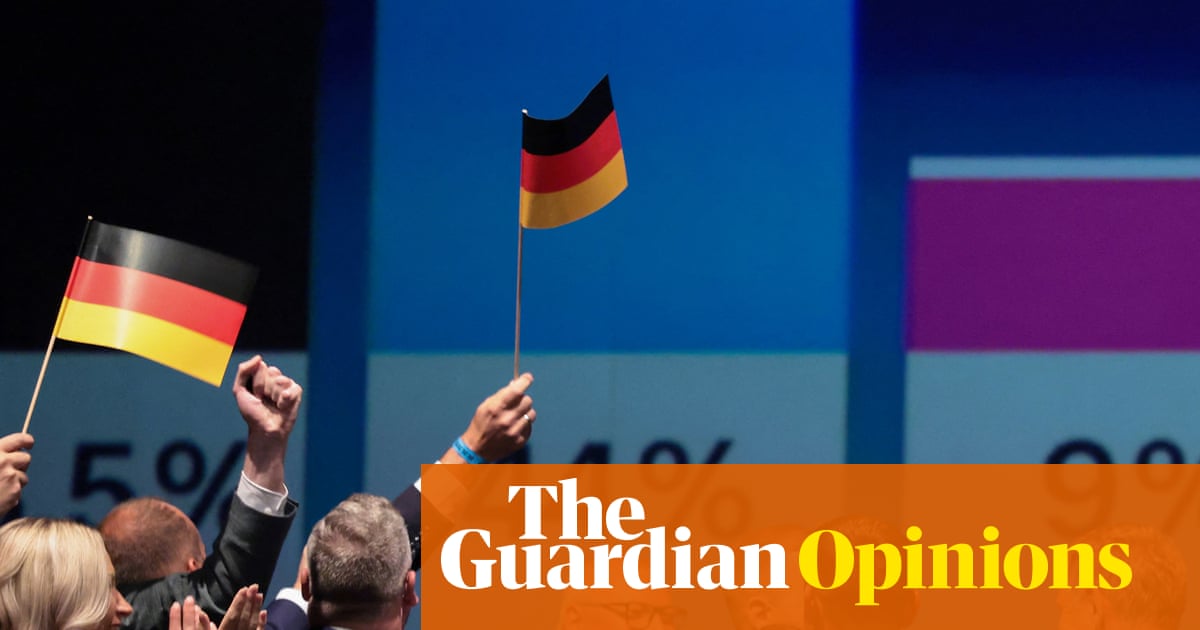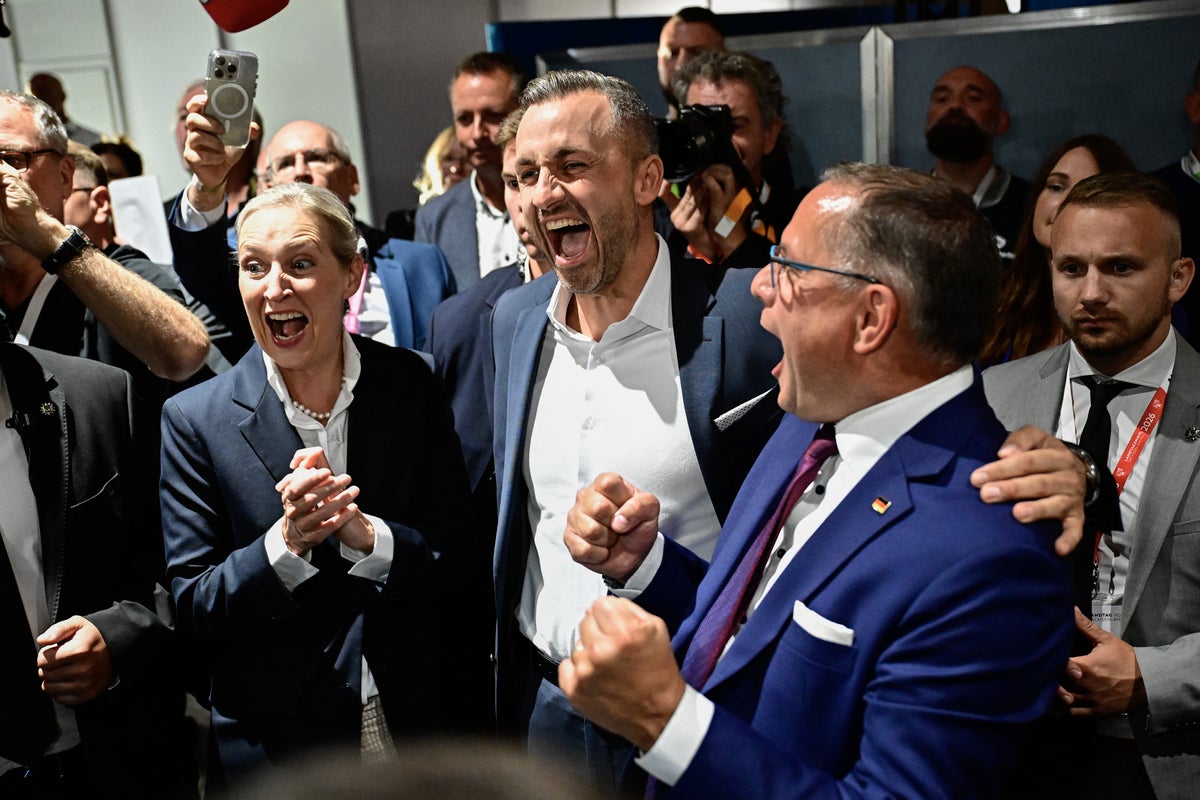
The Alternative for Germany (AfD) has achieved its strongest ever result in a western or eastern state election, taking 43.8% of the vote in Saxony-Anhalt on Sunday. The figure represents more than double the 20.8% the party won in 2021 and leaves the far right as the largest force in the state parliament by a wide margin. Chancellor Friedrich Merz's Christian Democratic Union (CDU) crashed to 17.2%, its worst performance in any eastern state since reunification.
A result that reshapes eastern politics
The scale of the shift is difficult to overstate. In 2021 the CDU won 37.1% in Saxony-Anhalt and the AfD trailed by more than 16 points. Five years later the positions have reversed, with the AfD leading the CDU by 26.6 points. The Social Democrats (SPD) slipped to 7.3%, the Greens to 4.1% and The Left to 3.8%, all below the 5% threshold for parliamentary representation in the state. Only the CDU, AfD and the Bündnis Sahra Wagenknecht (BSW), which entered with 11.2%, cleared the hurdle.
Turnout was 72.4%, up from 64.2% in 2021, suggesting the polarised campaign mobilised voters on both sides. The AfD's vote share is the highest recorded by any party in a state election in the former East Germany since the PDS (The Left's predecessor) won 44.4% in Saxony-Anhalt in 1998. That election produced a PDS-led minority government tolerated by the SPD; this time the arithmetic points in a different direction.
The CDU's crisis of relevance
For the CDU the result is an existential shock. Thorsten Frei, who leads the CDU/CSU group in the Bundestag, called it a "turning point for our country" and said conservatives must ask why they were no longer reaching voters. Party secretary-general Franziska Hoppermann moved quickly to shield Merz, rejecting any debate over his future and reiterating that the CDU would cooperate with neither the AfD nor The Left. That stance narrows the coalition options drastically.
Merz once vowed to cut the AfD in half. Since he became chancellor in 2025 the party's national polling has risen from the low 20s to the low 30s, and in eastern states it now regularly leads. The Saxony-Anhalt result will intensify questions about whether the CDU's strategy of rhetorical toughness combined with policy convergence on migration and energy has backfired, legitimising the AfD's agenda without winning back its voters.
Coalition arithmetic and the firewall
The AfD won 39 of the 83 seats in the Landtag, four short of an absolute majority. The CDU holds 15 seats, the BSW 11. A CDU, BSW coalition would command 26 seats, well short of the 42 needed. A three-way alliance of CDU, BSW and SPD would reach 33 seats, still insufficient. The only arithmetic path to a majority without the AfD would require The Left to re-enter parliament, which it failed to do, or the FDP to clear 5%, which it did not.
Sahra Wagenknecht, founder of the BSW, declared the "firewall policy" a failure on Monday. She warned that another coalition built purely to exclude the AfD would be an "affront" to voters. Her party's 11.2% makes it the kingmaker, but Wagenknecht has ruled out governing with the Greens or The Left, and the CDU has ruled out governing with the BSW at federal level, though state-level arrangements are not formally excluded.
The AfD's mandate claim
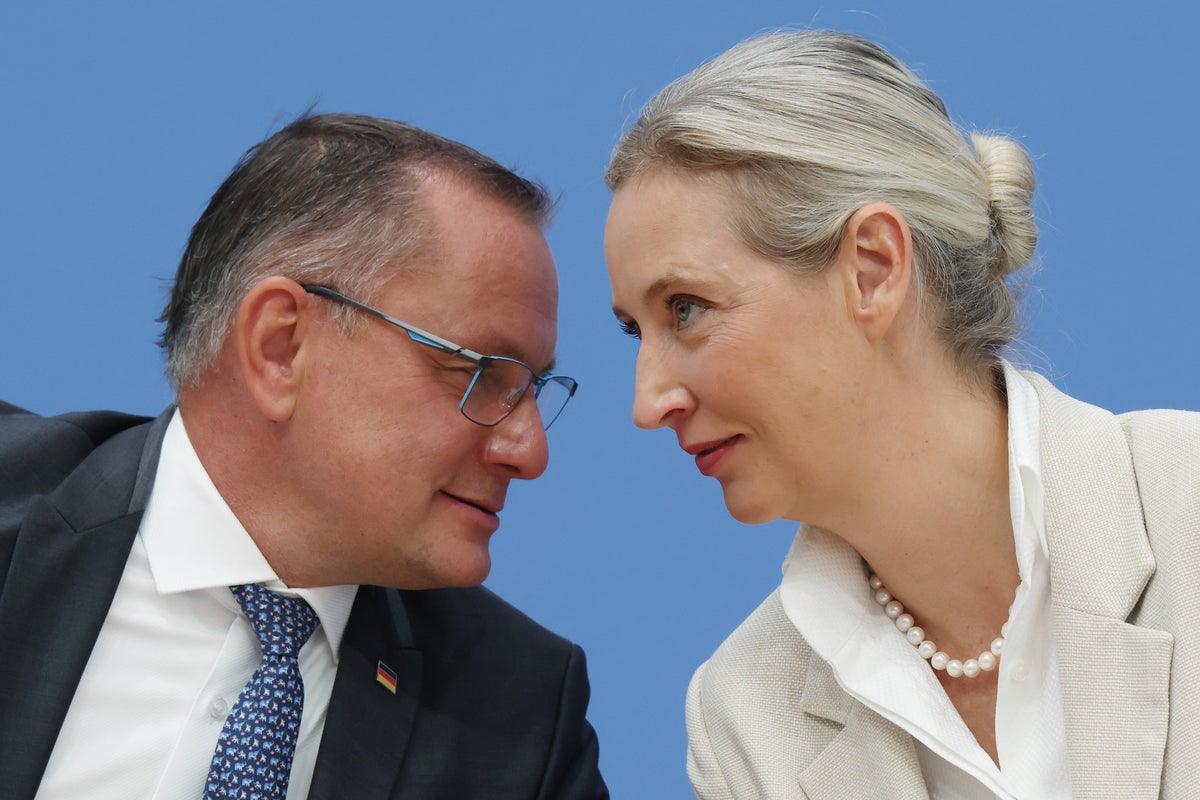
AfD co-leader Alice Weidel hailed a "historic result" and claimed a mandate to govern. Her fellow co-leader Tino Chrupalla went further, naming the party's lead candidate Ulrich Siegmund as the next minister-president and turning Merz's own rhetoric back on him: "We've cut the CDU in half." Chrupalla said the party would send invitations for coalition talks to all other parties. "Then we'll see who slaps away our hand," he told ARD. Asked whether the AfD could push for fresh elections if no workable majority emerges, he said the party was "prepared for all scenarios."
The AfD's strength in Saxony-Anhalt is not new. The party has led polling in the state since 2023, and its state branch is regarded as among the most radical, with the domestic intelligence agency classifying it as a confirmed right-wing extremist endeavour. That designation complicates any normalisation: the CDU's federal statute bars cooperation with parties under such surveillance, and the BSW has so far echoed that refusal.
What the federal government faces
The result lands on Merz's desk as a direct challenge. SPD co-leader Lars Klingbeil called it a "signal to Berlin" and said the federal government should reflect on its policies. His co-leader Bärbel Bas said the outcome was "frightening many people." Green co-chair Felix Banaszak described the surge as "dramatic." The Left's Heidi Reichinnek blamed federal policies for creating fertile ground for the far right. With federal elections due in 2029, the traffic-light coalition's successors in Berlin, a CDU, SPD alliance, will have to decide whether to double down on the firewall or seek a new vocabulary for the eastern electorate.
The Left and BSW factor
The Left's exit from the Landtag removes a potential coalition partner for any anti-AfD alliance. The party's national leadership had hoped its top candidate, Janina Böttger, would pull the party over the threshold, but the 3.8% result suggests the BSW has successfully captured the protest vote to the left of the SPD. Wagenknecht's party now holds the balance of power in a parliament where the only two-party majority is AfD plus any other party, a combination all others reject.
The BSW's platform combines left-wing economics with restrictive migration policy and scepticism toward NATO and EU integration. That overlaps with AfD positions on migration and foreign policy, making cooperation theoretically possible but politically toxic for both. Wagenknecht has said she would not enter a coalition with the AfD, but she has also refused to rule out toleration of a minority government.
What happens next
The constituent session of the new Landtag must take place within 30 days of the election. Until a minister-president is elected, Sven Schulze remains in office in a caretaker capacity. The AfD will test the firewall by demanding committee chairmanships proportional to its seat share, a normal parliamentary privilege that other parties may deny, triggering procedural battles. If no candidate secures a majority in three ballots, the state constitution allows a minority government or fresh elections. Chrupalla's remark that the AfD is "prepared for all scenarios" suggests the party may welcome a new vote, confident of crossing the 50% threshold. The next concrete deadline is the Landtag's opening session, likely in early October.
People mentioned
-
Thorsten Frei
-
Bärbel Bas
Organisations
Alternative for Germany · Christian Democratic Union · Social Democratic Party · Alliance 90/The Greens · The Left · Bündnis Sahra Wagenknecht