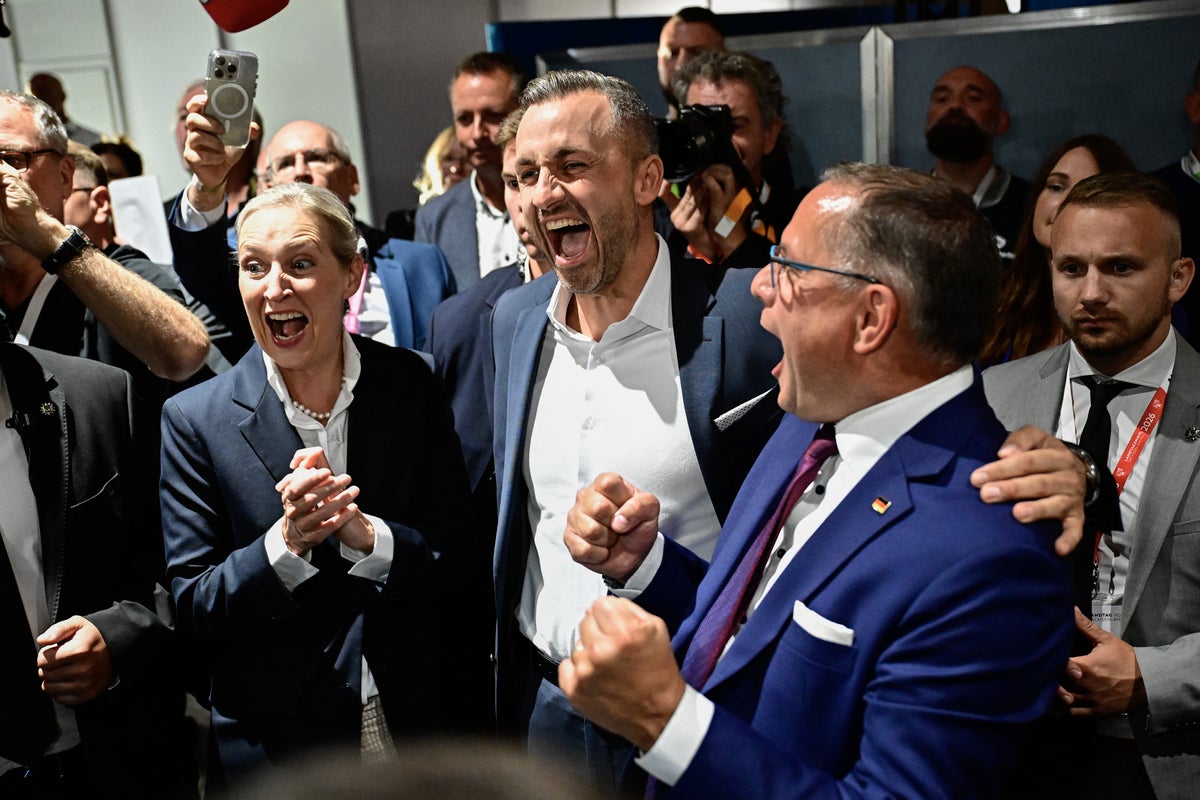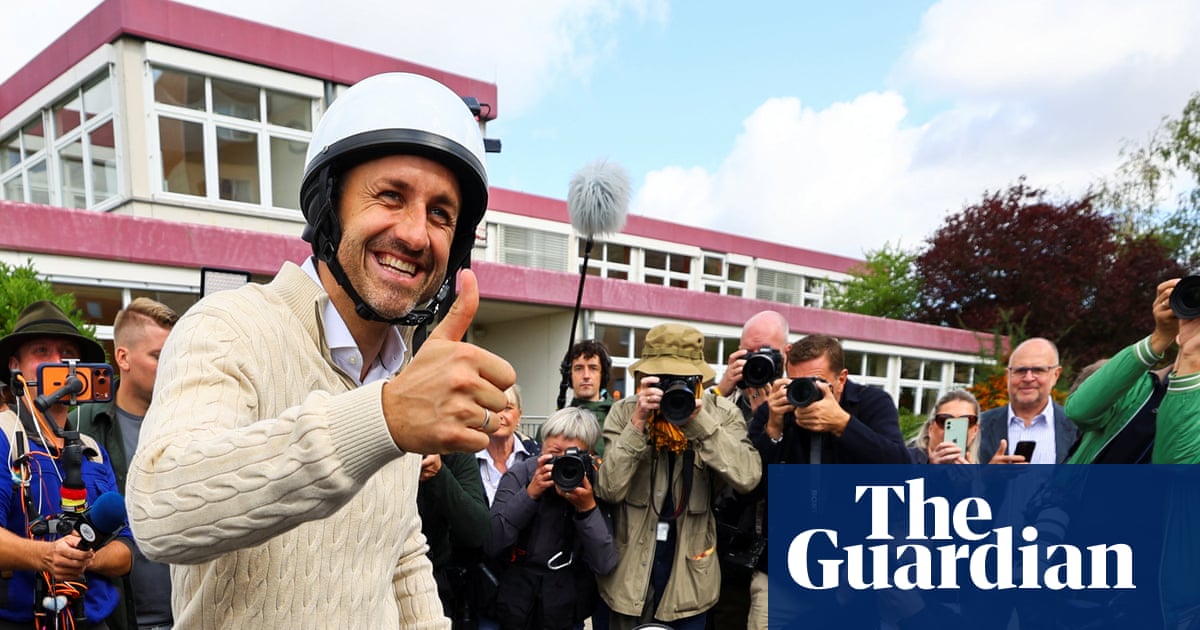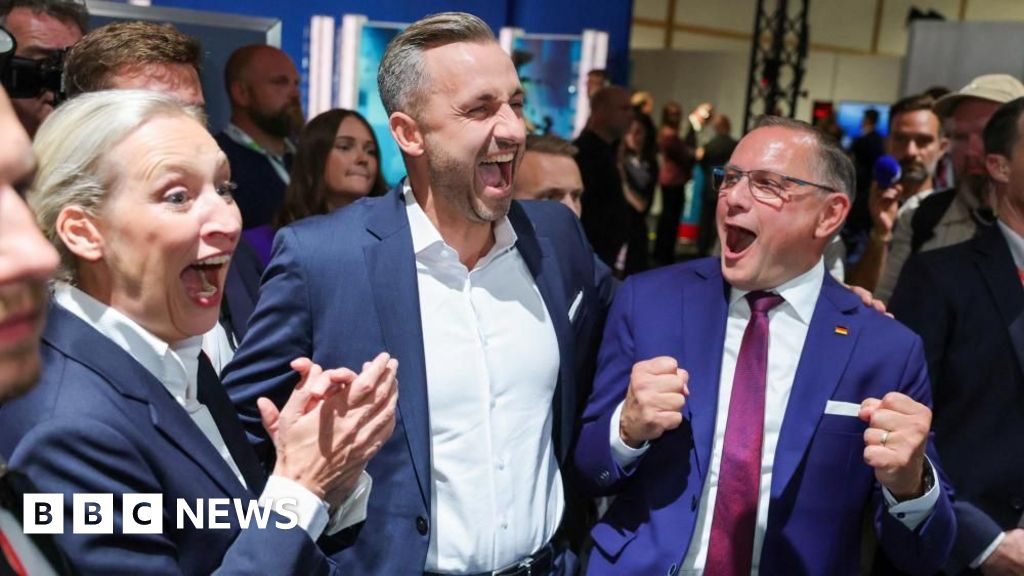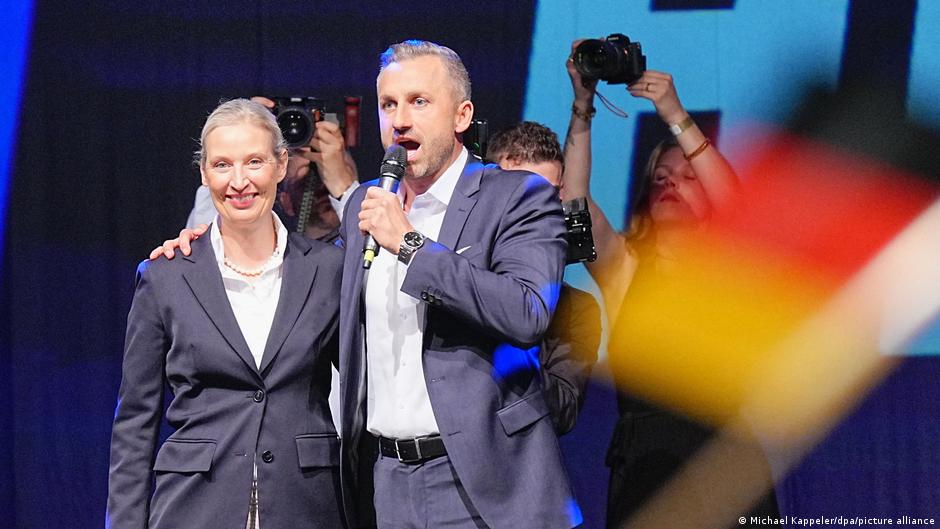
The Alternative for Germany has won 44.2% of the vote in Saxony-Anhalt, more than double its share from the previous state election and the strongest result for a far-right party in any German state election since reunification. The Christian Democratic Union (CDU) of Chancellor Friedrich Merz collapsed to 18%, its worst result in the state since 1990. Yet the AfD may still end up in opposition.
Every other party with seats in the new state parliament has ruled out governing alongside the AfD, with one partial exception. The Sahra Wagenknecht Alliance (BSW), which sits at exactly 5.0% and may yet fail to clear the threshold for parliamentary representation, has signalled openness to cooperation on individual policy issues. But AfD lead candidate Ulrich Siegmund dismissed the BSW as "not part of the solution but part of the problem."
A result that reshapes eastern German politics
The AfD's 44.2% represents a dramatic acceleration of a trend already visible across eastern Germany. In the 2021 Saxony-Anhalt election, the party won 20.8% and finished second to the CDU, which then took 37.1%. Five years on, those positions have reversed entirely. The margin between them is now more than 26 percentage points.
Siegmund declared the result would "shake all of Germany" and send a "self-confident signal" to Berlin. "We are going to get our country back, and we are starting with Saxony-Anhalt," he told supporters in Magdeburg. He also targeted the CDU's decision to keep Merz away from the campaign: "In other parties you hide the chancellor. In the AfD, we stand together."
The Greens, given up for dead in pre-election polls that placed them around 5%, secured 8.9%, their best-ever result in Saxony-Anhalt. Greens co-leader Felix Banaszak welcomed the result but acknowledged the wider picture: "These are dramatic conditions that are emerging here."
Why winning may not mean governing
Germany's proportional representation system does not reward the largest party with automatic power. The AfD's 44.2% almost certainly falls short of an absolute majority in the state parliament, and no other party will enter a formal coalition with it. Tino Chrupalla, the AfD's federal co-leader, suggested the party could form a minority government tolerated by other legislators. Siegmund rejected that option outright. "There will be no arrangements involving a minority government or anything like that," he said.
The BSW's position is the most ambiguous. Its lead candidate, Claudia Wittig, argued that excluding the AfD entirely would be "completely undemocratic" given its vote share, and said her party could work with the AfD on issues such as energy prices. But she rejected both Siegmund and CDU candidate Sven Schulze as premier, calling instead for a "nonpartisan" head of government. The BSW, founded in 2024 around former Left Party politician Sahra Wagenknecht, combines left-leaning economic positions with restrictive migration policies and scepticism toward German foreign policy.
The extremist classification and its consequences
In 2023, the Federal Office for the Protection of the Constitution (BfV) classified the AfD's Saxony-Anhalt branch as a confirmed far-right extremist organisation, citing antisemitic, anti-Muslim and racist statements by its functionaries. This designation permits the agency to place the branch under formal surveillance, intercept communications and use informants.
Josef Schuster, president of the Central Council of Jews in Germany, said he was "personally appalled" by the result. "A party officially classified as confirmed far-right extremist is only just short of governing a German state on its own," he told the Welt newspaper. He argued that voters who chose the AfD "despite or because of these goals bear responsibility for this result." The AfD's state programme includes tougher deportation policies, changes to school curricula, restrictions on cultural institutions and a stronger emphasis on nationalism and traditional German identity.
Russian disinformation accompanies the vote
Two disinformation campaigns linked to Russian actors operated during the election. The Matryoshka campaign, also known as Operation Overload, produced spoof videos mimicking the visual branding of outlets including DW, ARD, the BBC and Wired, falsely claiming CDU election fraud. Julia Smirnova, a senior researcher at the Center for Monitoring, Analysis and Strategy, said the videos had "mostly inauthentic" reach. A second campaign, identified by the Gnida Project as Storm-1516, circulated a staged video purporting to show election workers destroying AfD ballots. The video contained obvious fabrication errors: identical names on supposedly separate ballots, missing regulation hole punches and already-unsealed envelopes.
The firewall under strain
Heidi Reichinnek, co-leader of the Left Party, called on all parties to maintain the so-called "firewall" against the AfD. "Many people here are scared, people with migrant backgrounds, queer people," she said. "I'd like to tell them: you are not alone." The firewall, the informal agreement among mainstream parties to refuse any cooperation with the AfD, has held at federal level and in every state parliament so far. But as the AfD's vote share climbs past 40%, the democratic legitimacy of permanently excluding the largest party from government becomes harder to sustain, particularly in a state where one in two voters chose it.
The BSW's willingness to work with the AfD on select issues represents the first significant crack in that consensus. Whether other parties follow depends on coalition mathematics that remain unresolved. If the BSW clears 5%, a CDU-BSW-Greens alliance would hold roughly 32% of the vote between them, likely insufficient for a majority. A broader anti-AfD coalition might require bringing in the Social Democrats and the Left Party, a combination that would span deep ideological divides on economic policy and migration.
People mentioned
-
Josef Schuster
-
Claudia Wittig
-
Heidi Reichinnek
-
Felix Banaszak
Organisations
Alternative for Germany (AfD) · Christian Democratic Union (CDU) · Sahra Wagenknecht Alliance (BSW) · Central Council of Jews in Germany · Federal Office for the Protection of the Constitution (BfV)