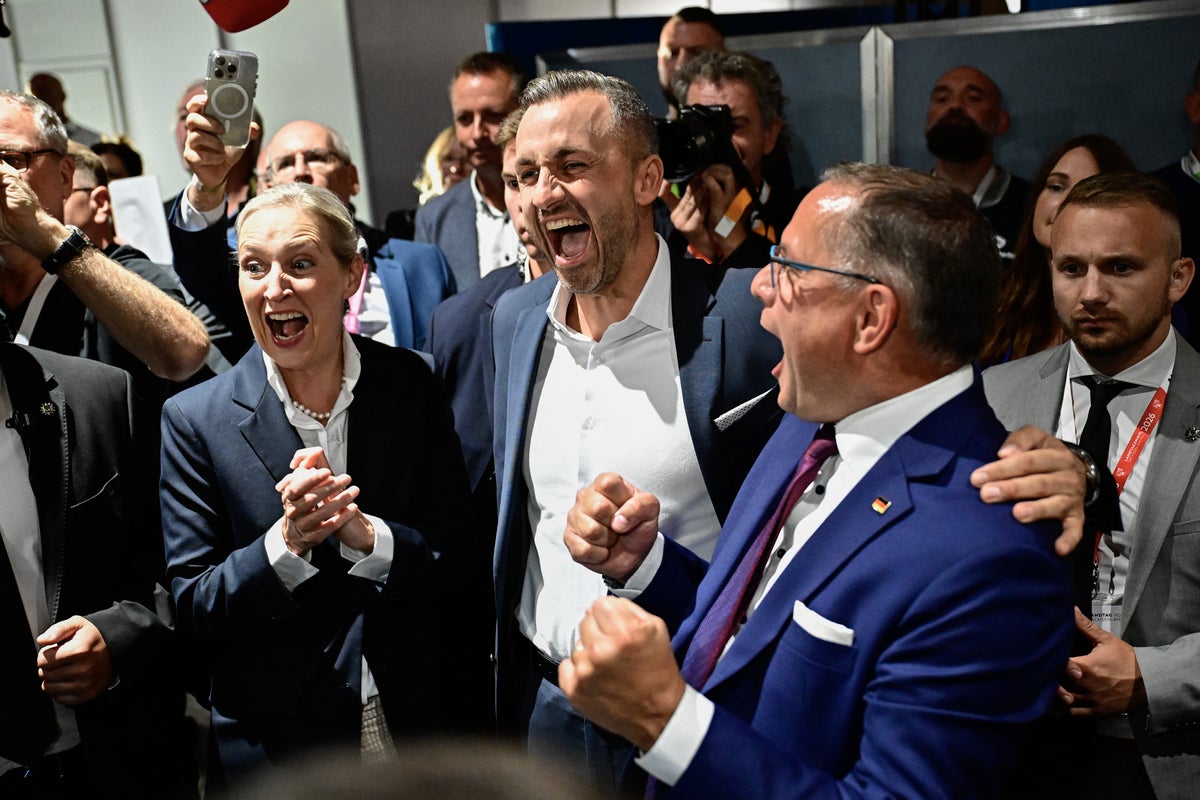
The Alternative for Germany (AfD) has achieved its strongest state election result to date, securing well over 40 percent of the vote in Saxony-Anhalt and leaving the established parties far behind. Yet the victory has produced a parliamentary deadlock: the party lacks a majority and faces a near-total blockade from potential coalition partners.
A firewall that holds
The immediate obstacle is the classification of the AfD's Saxony-Anhalt branch as "confirmed far-right extremist" by the Federal Office for the Protection of the Constitution, the domestic intelligence agency. That designation has hardened the refusal of every other party in the Landtag to enter coalition talks. The Christian Democratic Union (CDU), which has led the state government in coalition since 2016 and sits in the federal cabinet, was explicit. Franziska Hoppermann, the CDU's secretary-general, stated there would be "no cooperation with the far left or the far right."
The Social Democrats, Greens and Left Party have long maintained similar cordons. The only theoretical exception is the Sahra Wagenknecht Alliance (BSW), which campaigns on a left-wing economic platform combined with a Russia-friendly foreign policy. Sahra Wagenknecht herself has previously signalled openness to issue-based cooperation with the AfD. Whether the BSW clears the five-percent threshold to enter parliament remains uncertain, and even if it does, AfD insiders regard the ideological gap as too wide for a stable arrangement.
Minority government or opposition by design
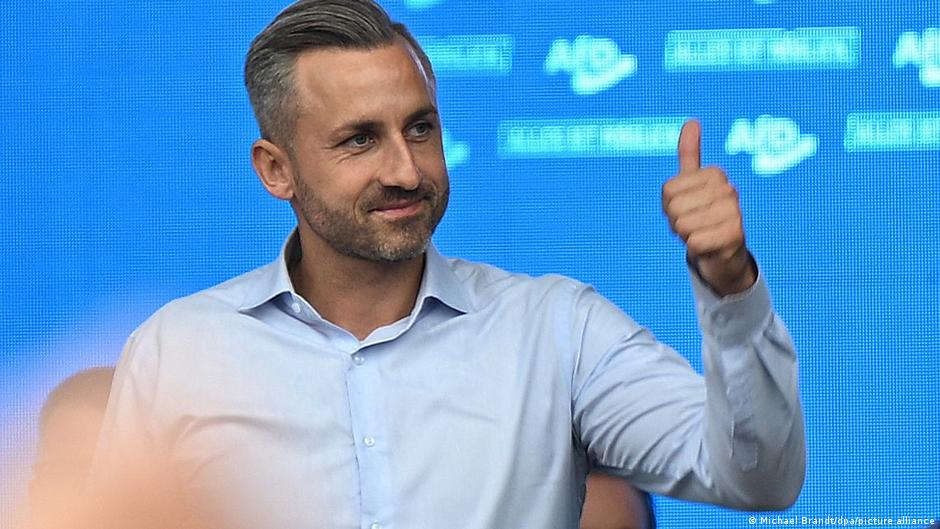
Without a coalition partner, the AfD's options narrow to a minority government dependent on case-by-case support or a deliberate stay in opposition. Ulrich Siegmund, the party's 35-year-old lead candidate, struck a combative tone on election night. "As a democrat, I will reach out to all those who wish to work with us to bring about a fundamental political turnaround," he told ARD, before adding that he saw no suitable partners. He was unambiguous about his priorities: "There will be no compromise with me."
Alice Weidel, the federal co-leader, adopted a softer rhetorical frame on ZDF, arguing that the CDU's stonewalling "gives the AfD a mandate to govern" and floating the possibility of a "tolerance agreement or even a coalition." The distinction matters. A tolerance agreement would allow an AfD minister-president to be elected with passive support from another party, while a coalition would require formal power-sharing. Neither currently has a willing counterpart.
A platform built on migration and institutional restructuring
The AfD's programme for Saxony-Anhalt goes well beyond migration, though that remains its centrepiece. The party demands a "180-degree turnaround in migration policy", including accelerated deportations of rejected asylum seekers, a universal work obligation for those remaining, and measures to make the state less attractive to immigrants. During the campaign, AfD speakers repeatedly linked migrants to urban crime and housing shortages.
Beyond migration, the platform proposes a radical reshaping of the state's public sphere: defunding public broadcasting, cutting grants for democracy-promotion projects, and establishing a volunteer security force aimed at migrants. Siegmund described these items as non-negotiable. The combination suggests a governing strategy that would test the limits of state authority and likely provoke legal challenges from the federal level and civil society.
The CDU's dilemma
For the CDU, the result is a strategic crisis. The party has governed Saxony-Anhalt for nearly a decade, currently in a three-way coalition with the SPD and FDP. Its lead candidate, incumbent Minister-President Reiner Haseloff, campaigned on stability and the firewall. The AfD's surge suggests that argument is losing purchase with a significant slice of the electorate. Federally, the CDU under Friedrich Merz has toughened its rhetoric on migration in an effort to stanch losses to the right, but the Saxony-Anhalt result indicates that tactical shifts have not reversed the trend.
Hoppermann's categorical rejection of cooperation closes the door on a formal coalition, but it also leaves the CDU with the burden of forming a government from the remaining fragments. A coalition of CDU, SPD, Greens and possibly the BSW or FDP would be unwieldy, ideologically stretched, and vulnerable to the charge that it exists solely to keep the AfD out. That dynamic has already weakened similar "Kenya" and "Germany" coalitions in other eastern states.
The BSW factor
The Sahra Wagenknecht Alliance is the wildcard. Founded in January 2024, it draws from the Left Party's traditional base while adopting positions on migration and Russia that overlap with the AfD. Polling before the election placed it near the five-percent threshold. If it enters the Landtag, it could hold the balance of power between the AfD bloc and the established parties. Wagenknecht has refused to rule out talks with the AfD on substance, but her party's left-wing economic programme, including higher wages and stronger tenant protections, clashes with the AfD's market-liberal wing. Any cooperation would be transactional at best.
Opposition as a weapon
Some AfD figures appear to prefer opposition. Oliver Kirchner, co-chair of the parliamentary caucus, told a party livestream that remaining behind the opposition lectern would be "brutal for the others." The calculation is straightforward: a minority government would force the AfD to moderate its platform to secure votes, exposing internal divisions. In opposition, the party can attack every decision of a fragile multi-party coalition, blame the establishment for gridlock, and campaign for an absolute majority in the next election.
The numbers are stark. The AfD has its mandate. The firewall has its logic. The gap between them is where Saxony-Anhalt's politics will live for the foreseeable future.
People mentioned
-
Oliver Kirchner
Organisations
Alternative for Germany · Christian Democratic Union · Sahra Wagenknecht Alliance · Federal Office for the Protection of the Constitution