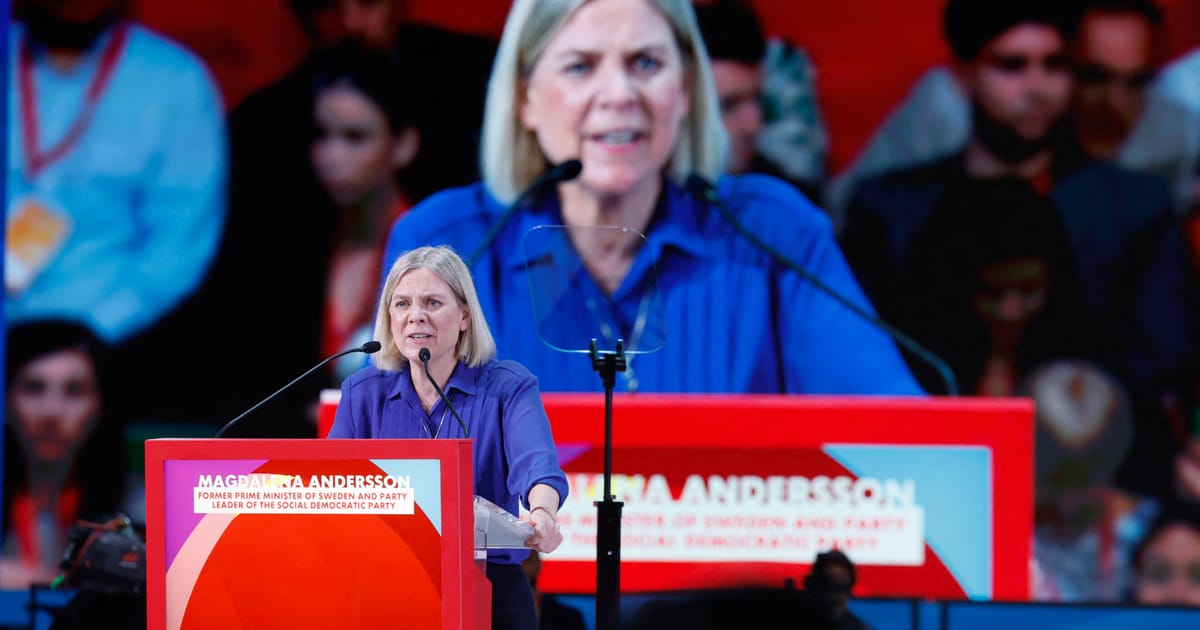
Sweden's election campaign has been upended by allegations that a senior official inside the far-right Sweden Democrats maintained pro-Kremlin ties for a decade, prompting the centre-left front-runner Magdalena Andersson to demand that Prime Minister Ulf Kristersson disclose what his office knew and when. With the vote scheduled for 13 September, the claims published on 3 September by the non-governmental group Expo have turned national security into the defining issue of the final stretch.
The Expo allegations and the official at the centre
Expo's investigation names Polina Malaberg, a Sweden Democrats employee who previously held roles linked to parliamentary committees dealing with EU affairs. According to the report, she promoted pro-Russian narratives over ten years, cultivated connections with a Russian state-backed organisation operating in Sweden, and brought Russian family members onto the premises of the Riksdag. Malaberg remains on the party payroll. The Sweden Democrats leader Jimmie Åkesson told POLITICO his party had been unaware of the posts but conceded "we have to look at this and sort this out," adding that Malaberg could not stay if she kept her pro-Russian views.
A partner inside the government machine
The security implications extend beyond Malaberg herself. Her partner, Gustav Gellerbrant, is a senior civil servant who heads the Sweden Democrats' Coordination Office inside the government, the formal liaison between the party and Kristersson's governing coalition. Gellerbrant is not accused of Russian links, but Andersson argues his relationship with Malaberg inevitably raises questions about his security clearance and whether classified information may have been exposed. "Is there information relating to national security that may have been exposed?" Andersson asked. "What measures has the prime minister taken and what measures does he intend to take?"
Kristersson's response and the political calculus
Kristersson has said Malaberg should be dismissed if the allegations prove true, telling Aftonbladet: "We are in a European war … You can't have people who sit around promoting pro-Russian narratives and work in the Swedish parliament." Yet Andersson says that is insufficient. She wants to know when the prime minister's office became aware of the claims and what intelligence was shared. The distinction matters because Kristersson has stated he would govern with the Sweden Democrats as formal coalition partners if his bloc wins, giving them ministerial posts, potentially including the foreign and EU portfolios.
Polls tighten as security and migration dominate
Polls have placed Andersson's Social Democrats ahead, but the gap between her centre-left bloc and Kristersson's right-wing alliance has narrowed in recent weeks. If Andersson wins, she would become one of the few centre-left leaders at the European Council table alongside Spain's Pedro Sánchez. Security and migration remain the top voter concerns. Kristersson's camp promises tougher gang violence crackdowns and accelerated deportations, including a plan to deport migrants educated in Sweden once they turn 18.
Andersson's migration line: strict but not retrospective
Andersson acknowledges Sweden's previously open border policy was "unsustainable" and advocates a "very strict" migration regime, including support for third-country "return hubs" for failed asylum seekers. But she draws a firm line at the Sweden Democrats' proposal to revoke permanent residency already granted. "Once you have permanent residency, it's permanent, right? You can't say yes and then 'no, we changed our minds'… That's not how Sweden works," she said. "Many of these people work. They are bus drivers. They are entrepreneurs creating work… It's insane." Asked whether she aligned more with Denmark's Mette Frederiksen or Spain's Sánchez on migration, she declined to choose, citing both as close contacts.
Foreign policy continuity with sharp edges
On Ukraine, Andersson pledged strong continued support and favoured using frozen Russian assets to fund Kyiv, a position that aligns with current government policy. She also backed a "frugal" stance in EU budget negotiations and opposed "decoupling" from the United States. The sharpest divergence lies in the Sweden Democrats' long-standing demand for an inquiry into leaving the European Union, a prospect Andersson warned would place half the cabinet, including the foreign and EU ministers, in the hands of a party that questions Sweden's membership. For context on Sweden's EU role, see the European Council's Sweden page.
Democratic norms and civil society under pressure
Andersson argued the risks of a Sweden Democrats government extend beyond foreign policy. "We've seen journalists threatened" since Kristersson began relying on the party's parliamentary support, she said. "NGOs are threatened if they criticize what the government is doing. They've been threatened to have their state support withdrawn." That claim points to a broader debate about the tone of Swedish politics since the far-right entered the corridors of power in 2022.
People mentioned
-
Jimmie Åkesson
-
Polina Malaberg
-
Gustav Gellerbrant
Organisations
Social Democratic Party · Sweden Democrats · Government of Sweden · Expo