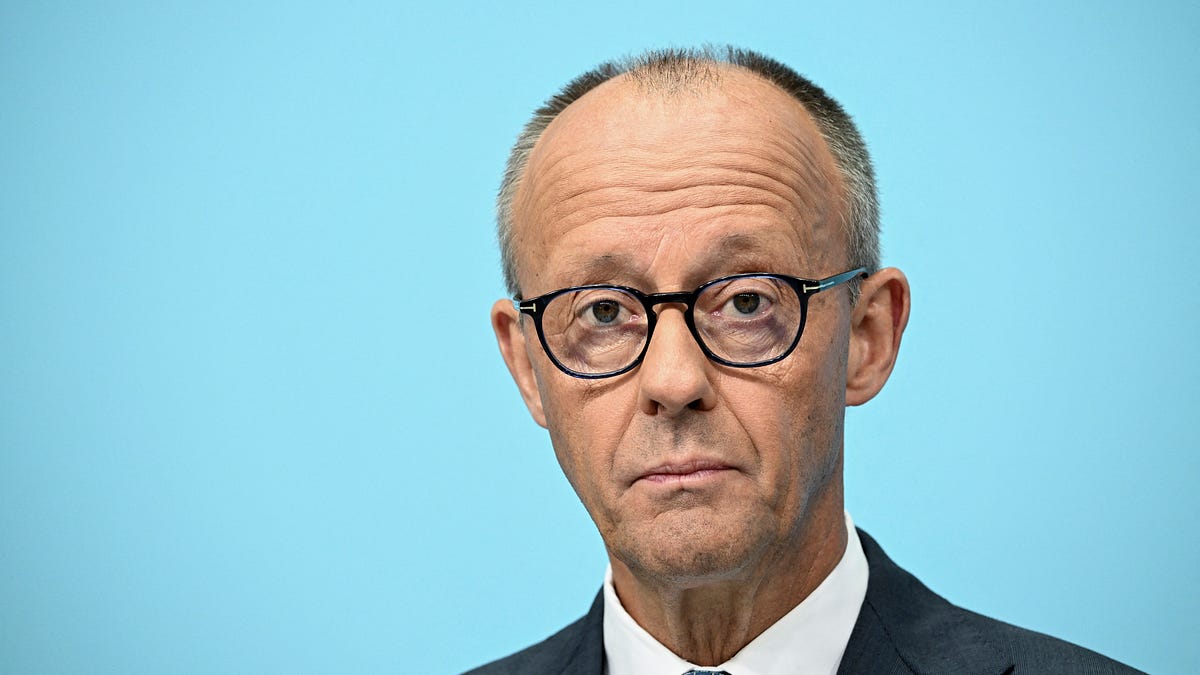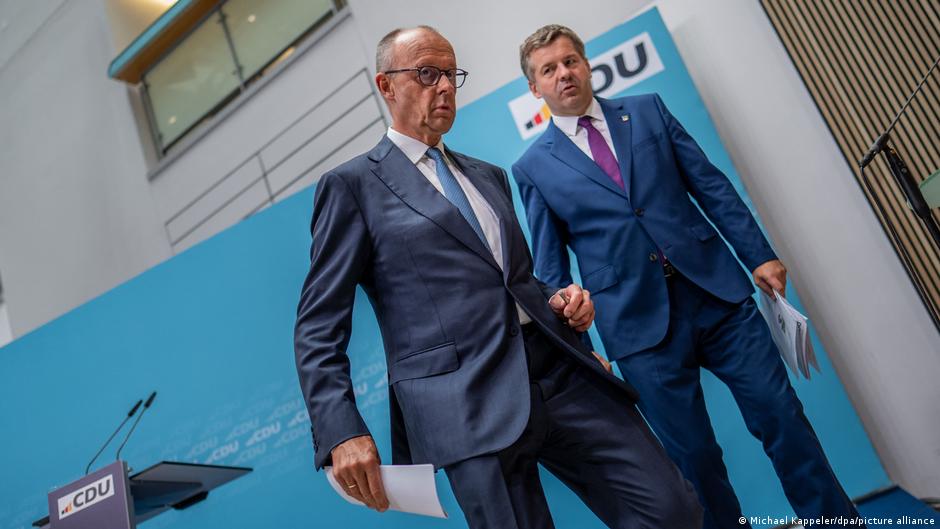
A state with just 1.6 million eligible voters has handed Chancellor Friedrich Merz the most uncomfortable morning of his premiership. The Alternative for Germany (AfD) won Sunday's election in Saxony-Anhalt, doubling its share of the vote compared with five years ago, while the chancellor's Christian Democratic Union (CDU) lost roughly half its support.
A result that inverts Merz's promise
Before he became chancellor in May 2025, Merz set himself a clear objective: halve support for the AfD. He intended to do this in part by adopting a hard line on migration, denying the far-right party its most reliable campaign issue. The Saxony-Anhalt result is the opposite of what he promised. The AfD grew; the CDU shrank. The strategy of outflanking the populists on immigration has not worked in eastern Germany, and the evidence is now unambiguous.
The result has intensified criticism inside the CDU. Merz's own party figures campaigned in Saxony-Anhalt and found that pension reform, not migration, was the issue hurting them most with older conservative voters. The chancellor's plan to overhaul the pension system has been attacked by his own side on the campaign trail.
Why Merz is unlikely to resign
Berlin had been speculating for months that Merz might step down if the result went badly, or that his party would force him out. Carsten Koschmieder, a political scientist at the Free University of Berlin, does not believe it. "I do not have the impression that he is a person who would resign," Koschmieder told Deutsche Welle before the vote. "Rather, he is very glad to be chancellor and has long worked toward that." Koschmieder also noted that there is no obvious successor within the CDU or its Bavarian sister party, the Christian Social Union (CSU). Merz appears determined to press ahead regardless.
The coalition puzzle in Magdeburg
Forming a state government in Saxony-Anhalt is now acutely difficult. The CDU, SPD and Greens could attempt a three-way coalition, but even together they are unlikely to command a majority in the state parliament. That would leave them reliant on the Left Party to tolerate their government without joining it.
This is awkward for Merz, who told the Mitteldeutsche Zeitung on Tuesday that cooperation with both the AfD and the Left Party was "out of the question" because of fundamental differences. The Left Party, descended from the old East German communists, is anathema to many in the CDU. But the arithmetic may leave no alternative.
The irony is sharp. The CDU's national leadership insists it will work with neither the AfD nor the Left. In eastern Germany, local CDU politicians take a different view: many consider cooperation with the AfD perfectly possible, and they categorically reject working with the Left. The result in Saxony-Anhalt forces this contradiction into the open.
The firewall under strain
All established German parties have committed to a firewall, or Brandmauer, refusing any coalition or confidence-and-supply arrangement with the AfD at any level. The reasoning is straightforward. Koschmieder put it plainly: "There are many conservative democrats in the CDU who say: We have nothing to do with the AfD. They want to abolish our democracy; they support Russia's President Putin and oppose Western integration and European unity."
Yet the firewall is under increasing strain. As the AfD's vote share rises, the mathematical possibilities for governing without it shrink. Saxony-Anhalt is the latest demonstration. Germany's domestic intelligence service classifies parts of the AfD as right-wing extremist, which gives the firewall its moral force. But local CDU politicians, watching their own vote collapse, are starting to ask how long the arithmetic can be denied.
Pension reform, the issue that hurt the CDU at home
Merz's pension overhaul is the domestic policy most likely to damage him inside his own coalition. He defends it in demographic terms: "The pension system is no longer sustainable because of demographics, and we have known this for years," he said. Germany's ageing population is well documented. The federal statistical office projects that the proportion of over-67s will rise significantly in coming decades, while the working-age population shrinks. Destatis, Germany's federal statistical office, has been tracking this shift for years.
But knowing the numbers and winning the argument are different things. CDU candidates in Saxony-Anhalt found that pension reform was the issue voters raised most often, and not in support. An older electorate that has voted CDU for decades feels directly threatened by changes to retirement provision. The AfD, which opposes the overhaul, was the beneficiary.
The SPD's mixed signals
The Social Democrats had a curious night. In Saxony-Anhalt they polled around 8 per cent, which sounds dismal but represents a meaningful recovery from the predictions of six months ago. Nationally, the SPD remains weak, but it is not collapsing further.
The more significant test comes on September 20 in Mecklenburg-Western Pomerania, where the SPD premier Manuela Schwesig looks likely to secure another term. Polls put her party at around 30 per cent, enough to form a government with the Left Party, the CDU, or potentially both. A Schwesig victory would give the SPD something to celebrate, but it would also underline how different eastern state politics are from the national picture in Berlin.
People mentioned
-
Carsten Koschmieder
Organisations
Alternative for Germany · Christian Democratic Union · Social Democratic Party · Left Party · Alliance 90/The Greens