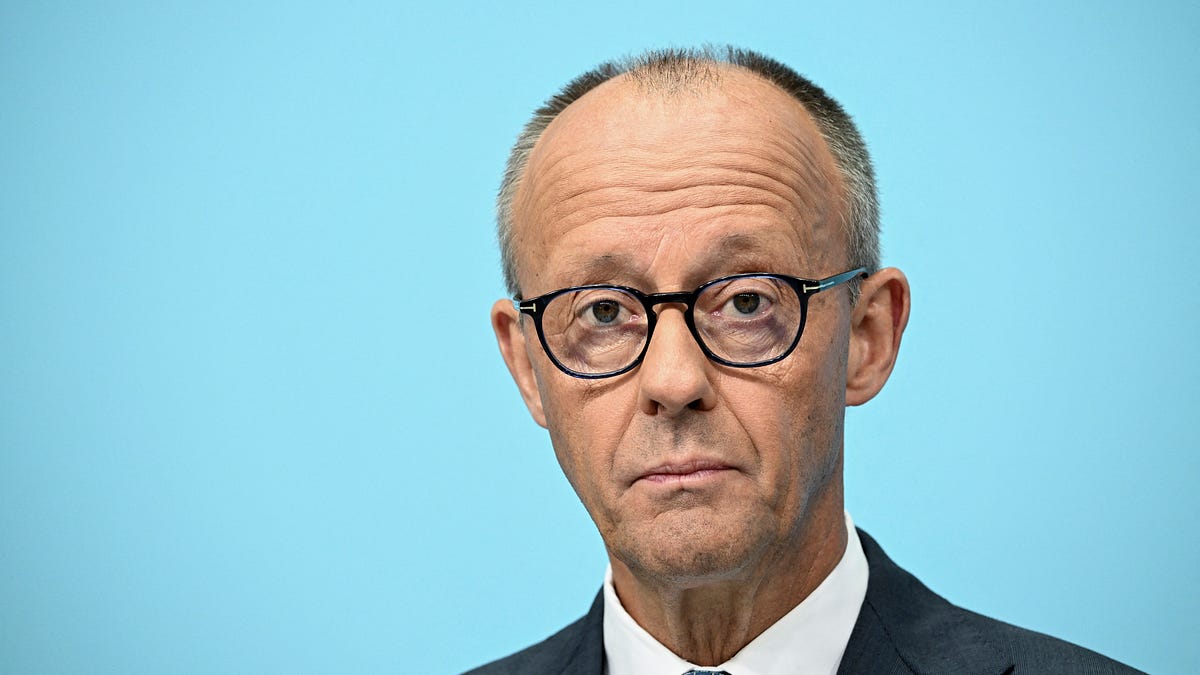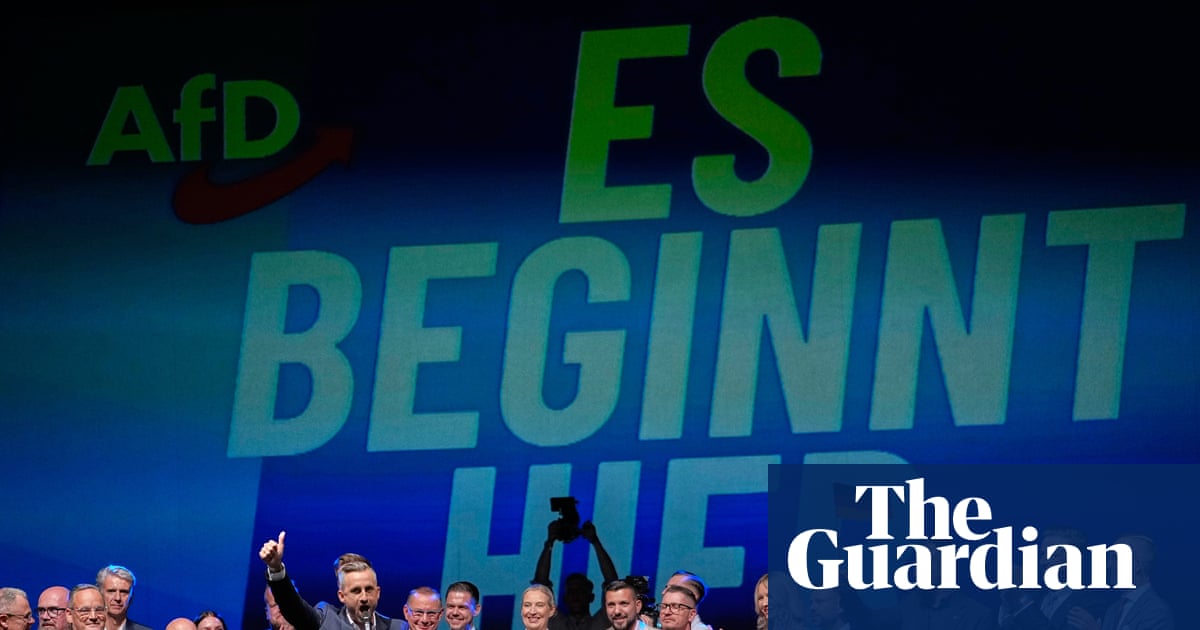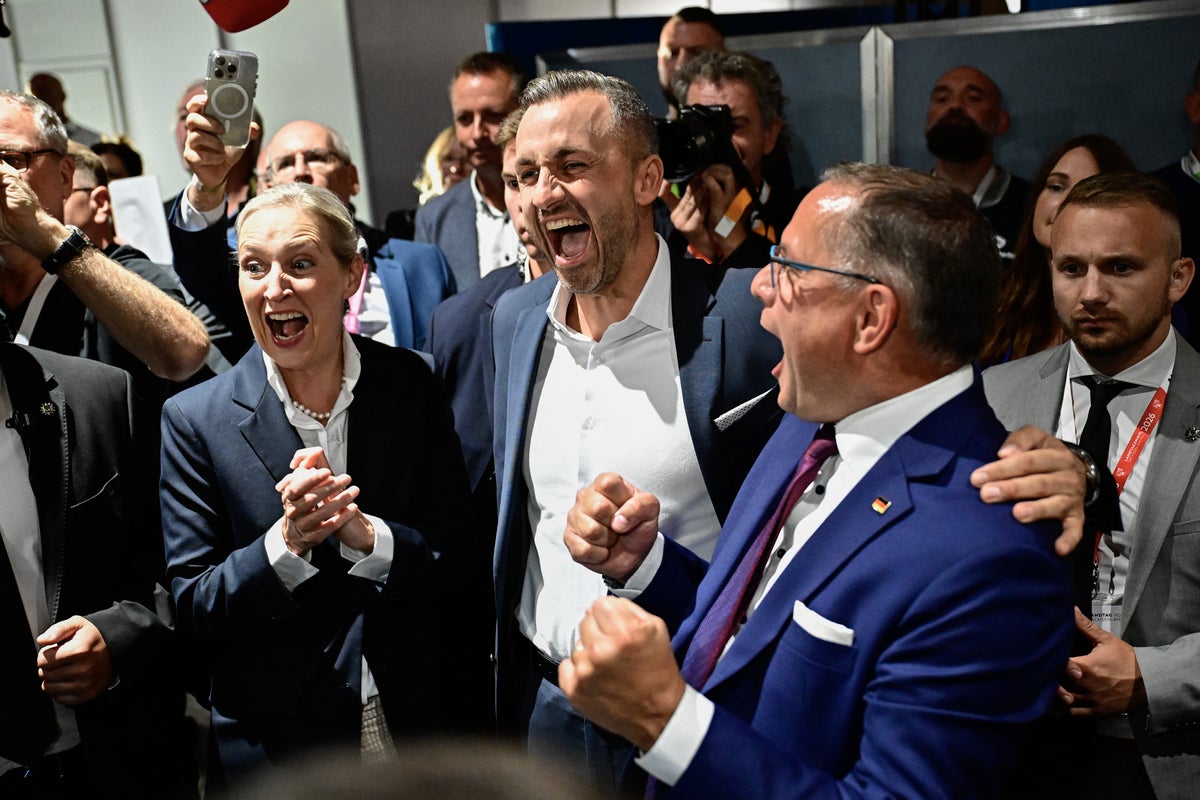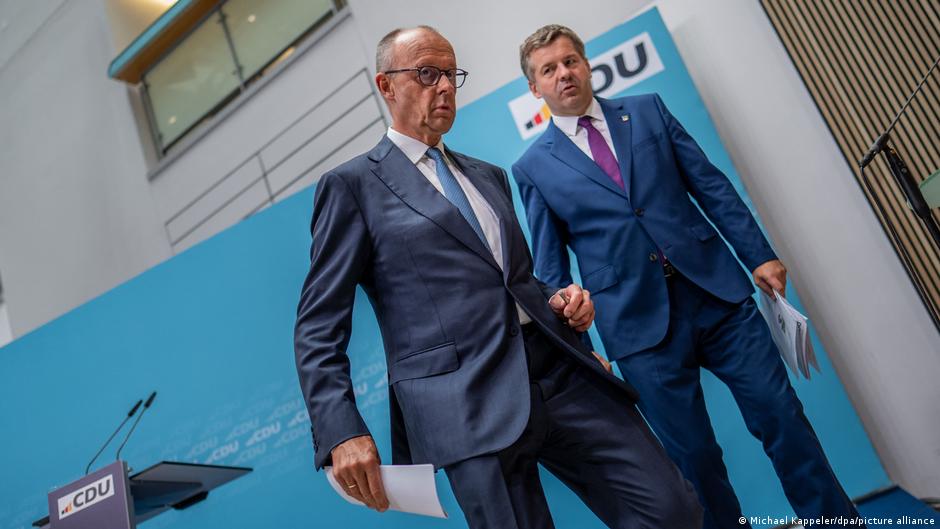
Friedrich Merz looked like a man who had been up all night. Standing at the CDU headquarters in Berlin on Monday, the chancellor described the previous day's election in Saxony-Anhalt as an earthquake, a disaster, a catastrophe. His party colleague Sven Schulze, the outgoing minister-president of the eastern state, said nothing. He did not need to. The numbers spoke loudly enough: the Alternative for Germany had won, the CDU had been routed, and the far right now sits closer to executive power in a German state than at any point since 1945.
A result that crosses borders
Merz did not confine his analysis to Magdeburg. "Not only did something change in Saxony-Anhalt yesterday but throughout all of Germany," he said. "It will have repercussions, including on the international stage." The chancellor spelled out why: the AfD opposes military support for Ukraine against Russia's invasion, and many of its politicians maintain close ties to Vladimir Putin's government. For a chancellor who has staked his foreign policy on reliability within NATO and the European Union, the arrival of a Kremlin-friendly party at the threshold of state government is a strategic rupture.
The 60% figure Merz cited, the combined vote share of the AfD, The Left Party and the Sahra Wagenknecht Alliance, is his own calculation. He argues all three disregard the rule of law. Critics will note that The Left Party and the BSW sit in state governments elsewhere without triggering constitutional alarms. But Merz's framing is deliberate: he is drawing a line between democratic competition and what he calls a rejection of the constitutional order itself.
History and the language of seizure
The chancellor's rhetoric reached for historical weight. "In our country, these values are not up for debate. Power is granted, not seized. And the minority is not the enemy of the majority." The phrase "seizure of power", Machtübernahme, is the term historians use for the Nazis' ascent in 1933. Merz knows this. So does every German listener. By invoking it, he places the AfD in a lineage the party furiously rejects, while signalling to international partners that Berlin understands the gravity of the moment.
The narrow miss and the danger ahead
The AfD fell short of an absolute majority in the Magdeburg Landtag by the slimmest of margins. That gap is now the most consequential number in German politics. Ulrich Siegmund, the AfD's top candidate, has declared he does not want a coalition, he wants absolute power. He does not have it. But he may not need it. If a handful of CDU legislators in Saxony-Anhalt break party discipline and vote for Siegmund in a minister-president election, the firewall collapses. Merz would face a revolt in his own ranks while leading a federal government that includes the SPD and Greens, both of whom treat the AfD as toxic.
Schulze knows this. On election night he repeatedly blamed dissatisfaction with the Merz government in Berlin for his defeat. The silence beside the chancellor on Monday was louder than any accusation. The CDU's eastern wing has long felt neglected by a leadership focused on the western electorate. That resentment now has a parliamentary mechanism.
Pension reforms and the coalition fracture
The immediate policy casualty may be the pension overhaul Merz has championed. The reform aims to close a chronic deficit in the statutory system but imposes visible pain on contributors and pensioners alike. It was a centrepiece of the CDU's campaign in Saxony-Anhalt and a lightning rod for anger. Hours before Merz's press conference, Lars Klingbeil, the SPD leader and vice chancellor, suggested the coalition should reassess the reforms in light of the defeat. Merz did not budge. He defended the overhaul as necessary and unavoidable, signalling that he would rather risk his coalition than abandon his economic credibility.
This is a gamble. The SPD and Greens entered government with Merz on the understanding that social balance would temper fiscal discipline. If the chancellor treats a state election defeat as a mandate for austerity, the federal coalition may not survive the autumn. The pension system is administered at federal level, but the political cost is paid in state ballots. Saxony-Anhalt was the first invoice.
Siegmund's media war and the BSW factor
At the Federal Press Conference earlier on Monday, Siegmund turned the cameras on the journalists. "It was also thanks to you that we made it," he said sarcastically. "Thank you very much for the great coverage during this election campaign." Der Spiegel had recently put him on its cover as "Germany's most dangerous man." Siegmund used the label as a badge, telling the packed hall that never before had the gap been so wide between media dictating how Saxony-Anhalt should live and the reality of life in the state.
He ducked the question of whether the result constitutes a mandate to govern. The BSW, which split from The Left Party over migration and Russia policy, could tolerate an AfD minority government without formally joining it. That possibility, a de facto alliance between the far right and a left-populist party united by opposition to the western consensus, is the configuration that keeps Berlin strategists awake.
The eastern disconnect
Saxony-Anhalt is not an outlier. It is the third eastern state where the AfD has finished first or second in recent years, after Thuringia and Saxony. The structural drivers, deindustrialisation, demographic decline, a sense of abandonment by western decision-makers, are shared. Merz's pension reform, designed in Berlin by western technocrats, landed in this soil like a stone on glass. The chancellor's insistence that the reform stays suggests he believes the alternative, fiscal drift, is worse. Voters in Magdeburg disagreed.
What happens next in Magdeburg
The Landtag must convene within 30 days of the election to elect a minister-president. If Siegmund fails to secure a majority in the first two ballots, a third ballot requires only a plurality, meaning he could win with AfD votes alone if CDU deputies abstain or defect. The CDU federal executive has threatened expulsion for any legislator who backs the AfD. But party discipline in the east has frayed before. The next three weeks will test whether Merz's authority in Berlin extends to the Elbe.
Merz ended his appearance with a sentence that sounded less like a politician than a man who has read the history books. "We know that Germany bears a special responsibility because of its history. We will always defend our political order and our firm anchoring in Europe." The words were measured. The test is whether his party, his coalition and his country believe them.
People mentioned
Organisations
Christian Democratic Union · Alternative for Germany · Social Democratic Party · Sahra Wagenknecht Alliance · The Left Party