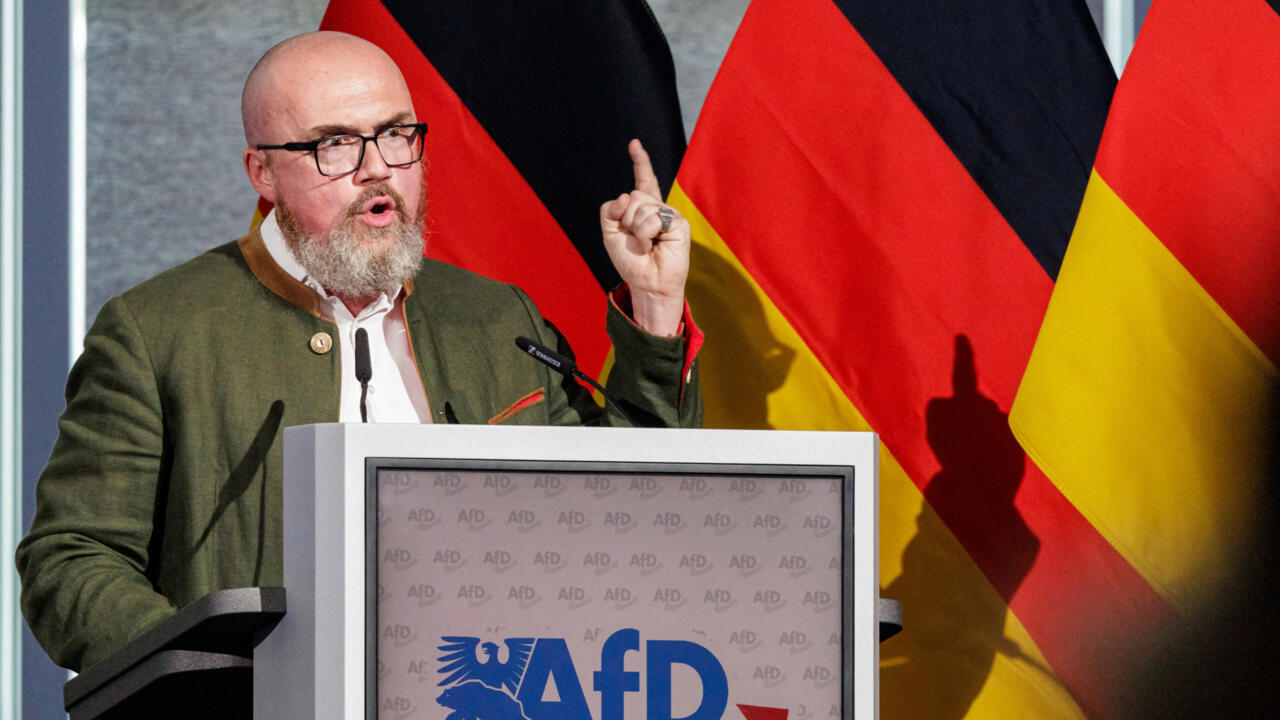
The Alternative for Germany (AfD) won a state election in Thuringia on 1 September 2024, the first time the far-right party has finished first in any German state contest. The result, alongside a strong showing in Brandenburg where the Social Democrats (SPD) only narrowly held on, has forced mainstream parties to confront the depth of support for the far right in eastern Germany.
A first for the far right
Thuringia has become the first German state where the AfD claimed the largest share of the vote in a Landtag election. The party had been polling strongly in the east for years, but translating that support into a first-place finish marks a psychological threshold that mainstream parties had hoped would never be crossed. The AfD's victory in Thuringia is not a marginal event confined to one small state. It demonstrates that a party classified by domestic intelligence as a confirmed right-wing extremist organisation in parts of the country can attract the largest bloc of voters in a democratic election.
Thuringia's Office for the Protection of the Constitution, the state's domestic intelligence agency, has classified the AfD's regional branch as definitively right-wing extremist. That designation has not deterred voters. The party's rhetoric on immigration, national identity and economic insecurity has resonated in a region where wages remain below the western German average and where trust in established democratic institutions runs thin.
Brandenburg holds, barely
In Brandenburg, the state surrounding Berlin, the SPD managed to retain power but only after a contest that exposed the fragility of its traditional dominance. Chancellor Olaf Scholz's Social Democrats have long counted Brandenburg as a stronghold, but the AfD's advance pushed the ruling party into a defensive campaign focused on stopping the far right rather than promoting its own policy record.
The narrowness of the Brandenburg result matters beyond one state. It signals that even in territories where the SPD has deep organisational roots and historical loyalty, the AfD can now compete for first place. The pattern is consistent across eastern Germany: the AfD polls at levels that would have been unthinkable a decade ago, and mainstream parties are struggling to develop a response that goes beyond insisting voters should simply reject extremism.
The BSW factor and the 5% threshold
The September 2024 elections also introduced a new variable into German politics: the Bündnis Sahra Wagenknecht, or BSW. The party, founded by the former Left Party politician Sahra Wagenknecht, blends left-wing economic positions with conservative social values and scepticism towards immigration. Its polling figure of 4.972% places it agonisingly close to the 5% threshold required to enter the Bundestag and most state parliaments.
That fraction of a percentage point carries outsized significance. Under Germany's electoral law, parties falling below 5% win no seats, regardless of how close they come. The BSW's near-miss raises questions about whether the threshold, designed to prevent fragmentation and extremism, is now also excluding a party that draws support from the same disaffected voters the mainstream is trying to win back. If BSW had cleared the bar, the composition of several state parliaments would shift, potentially altering coalition mathematics across the east.
The Federal Returning Officer's data, published without rounding, shows BSW at 4.972%. Rounded to one decimal place, the figure becomes 5.0%, which would suggest the threshold had been met. The distinction between the rounded and unrounded number is not academic. It determines whether a party's representatives sit in parliament or watch from outside, and whether its voters feel represented or dismissed.
The east-west divide deepens
The results in Thuringia and Brandenburg are the latest evidence that Germany's political geography is increasingly defined by the old Cold War border. In western states, the AfD polls in the low double digits. In the east, it competes for first place. The divergence reflects persistent economic disparities: eastern Germany's GDP per capita remains well below the western average, and many regions have experienced decades of depopulation as younger residents move west for better-paid work.
The economic gap has a political dimension that mainstream parties have struggled to address. Voters in the east frequently express a sense that reunification was something done to them rather than with them, that their concerns are dismissed by a Berlin establishment dominated by western politicians, and that immigration policy imposes costs on communities that were never consulted. Whether or not these grievances are accurate in every detail, they are sincerely held, and the AfD has proved adept at channelling them into electoral support.
The SPD's brand of centrist social democracy and the CDU's mainstream conservatism have both lost ground to a party that promises to disrupt the system both have led for decades. The challenge for mainstream politicians is that the AfD's appeal rests partly on economic discontent that conventional fiscal policy has failed to resolve, and partly on cultural grievances that liberal democratic norms make it difficult to accommodate.
Merz and the conservative dilemma
Friedrich Merz, who leads the CDU, faces a strategic calculation shaped by the AfD's advance. His conservatives remain the largest mainstream force nationally, but governing in a fragmented landscape requires coalition partners. The traditional option of partnering with the SPD produces centrist governments that leave conservative voters frustrated. Turning to the Greens alienates the CDU's more traditional base. And cooperating with the AfD remains formally off-limits, a position reaffirmed by party congresses but tested by local pragmatism in eastern state assemblies.
The reference in recent commentary to Merz needing to navigate a new era without Washington as a close ally points to a broader shift in German foreign policy assumptions. The CDU has historically been the most Atlanticist of Germany's major parties. A United States less engaged in European security forces Berlin to reconsider defence spending, energy policy and its relationship with France, all of which have domestic political consequences that cut across the usual left-right divide.
Coalition arithmetic after September
The practical consequences of the September votes are already visible in coalition negotiations. In Thuringia, the AfD's first-place finish does not give it a governing majority, and all other parties have pledged not to work with it. But the arithmetic of exclusion is uncomfortable: the remaining parties must construct a coalition from a fragmented field that may include the Left Party, the SPD, the Greens and the CDU, a combination with profound internal disagreements on economic policy, energy and social issues.
In Brandenburg, the SPD's narrow victory means it too must find partners. The BSW's position near the threshold complicates matters. If the party enters the state parliament, it becomes a potential coalition participant whose policy demands on immigration and Ukraine may prove incompatible with the SPD's national stance. If it falls below 5%, the SPD's options narrow further.
What the polling aggregators show
Aggregated polling data, compiled by outlets including Politico's Poll of Polls, tracks voting intention across Germany by combining results from multiple external polling firms. The methodology excludes surveys that fail to meet criteria on sample size, methodology and transparency around funding and commissions. Projections are displayed by fieldwork date, meaning they can shift as additional polls are added to the dataset.
The aggregation process matters because individual polls can produce outlier results that distort the picture. A single poll showing the AfD at 30% in one eastern state generates headlines; the aggregated trend, which smooths out such variations, provides a more reliable guide to actual support. The current aggregated data confirms what the state election results demonstrated in practice: the AfD is not a fringe phenomenon in eastern Germany. It is a structural feature of the political landscape, drawing consistent support from roughly a quarter to a third of voters across the former East.
Implications for European politics
Germany's eastern shift has consequences well beyond its borders. The AfD's parliamentary presence has already influenced Berlin's stance on EU migration policy, fiscal transfers and defence coordination. A stronger AfD, particularly one that has won a state election outright, increases the pressure on any German government to adopt harder lines on border control and to resist EU-level integration that requires domestic spending.
The party's scepticism towards military support for Ukraine and its opposition to sanctions on Russia align it with a broader populist current in European politics that includes France's National Rally and Hungary's Fidesz. A Germany where the AfD holds governing influence in eastern states, even without entering federal government, becomes a less reliable partner for EU institutions seeking consensus on foreign policy and security.
The BSW adds another variable. Sahra Wagenknecht's party opposes further military support for Ukraine and has called for diplomatic engagement with Russia, positions that complicate Berlin's ability to present a united front within NATO and the EU. If BSW clears the 5% threshold in future elections, its parliamentary group could become a coalition partner at state level, pulling policy on foreign affairs away from the current consensus.
People mentioned
Organisations
Alternative for Germany · Social Democratic Party · Christian Democratic Union · Bündnis Sahra Wagenknecht