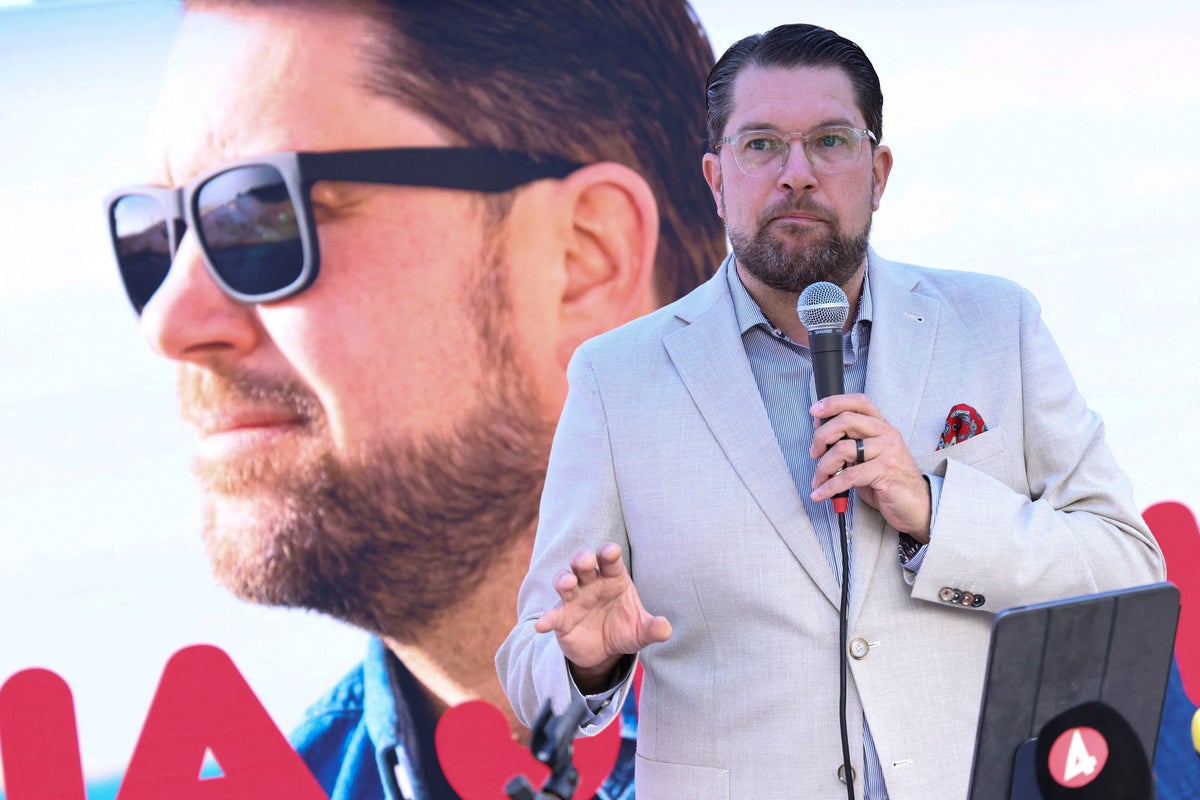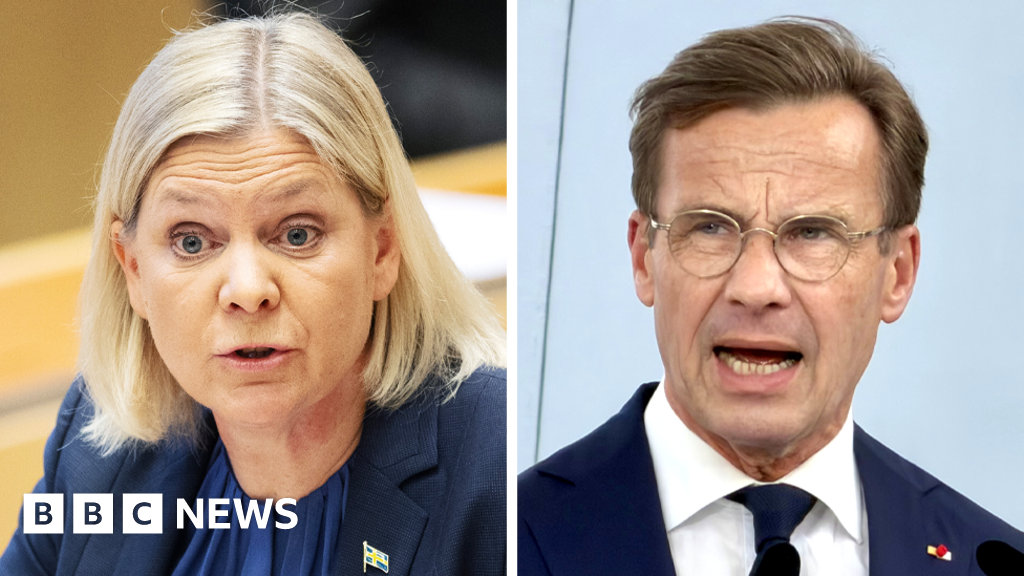
Sweden's general election this weekend has become a contest where the margin between the two main blocs stands at roughly three percentage points, and the question of whether a party with neo-Nazi origins enters government could determine the result.
An Ekot poll on Friday placed the left-wing bloc at 50.8 per cent against the right-wing bloc's 47.6 per cent. The Social Democrats, led by former prime minister Magdalena Andersson, polled at 28.6 per cent. The Sweden Democrats, who trace their founding to Nazi sympathisers in the 1980s, registered 18.3 per cent, making them the second largest party in the survey. Other opinion polls on Friday also put the left ahead.
More than eight million Swedes are eligible to vote for the 349 seats in the Riksdag. The country's bloc system, with four parties on each side, means coalition and minority governments are the norm rather than the exception.
The Sweden Democrats' long march
For decades after their founding, the Sweden Democrats were treated as pariahs by the entire political establishment. That isolation ended gradually, and then abruptly. In the 2022 election, the party became Sweden's second largest, capitalising on voter concern over immigration and gang violence. The result was a watershed: a party that had been shunned was suddenly indispensable to forming a right-of-centre government.
Since then, the SD has provided external support to the centre-right minority coalition led by Ulf Kristersson. No Sweden Democrat has held a ministerial post. But the party's influence on policy has been unmistakable: the coalition has abolished permanent residency for refugees and expanded deportation procedures, measures that align directly with SD demands. The current government's approach to migration and asylum has been among the strictest in the European Union.
This election raises the stakes. A strong SD showing could push the party from external supporter to full governing partner, with ministers sitting around the cabinet table for the first time.
The normalisation question
Nicholas Aylott, associate professor of political science at Södertörn University, told the BBC that the Sweden Democrats entering government "would be another big step in the normalisation of the party". He added that while this is not the dominant issue for most voters, it could still shape the outcome.
Some voters who would otherwise back centre-right parties may switch to the opposition because they are uncomfortable with the prospect of SD ministers, Aylott explained. Their numbers may be small, but in a race separated by 3.2 percentage points, even a modest defection could matter. "They might just tip the balance against the incumbent right-wing bloc," he said.
A campaign shadowed by Russia allegations
The final days of the campaign have been complicated by allegations that a Sweden Democrat official circulated pro-Russian messages on social media. Kristersson said the official should be dismissed if the claims prove accurate. Jimmie Åkesson, the SD leader, said the party was investigating.
The episode touches a nerve. National security has been a prominent campaign theme, and Sweden's recent accession to NATO has made relations with Russia a more visible political question than at any point in decades. A party that traces its roots to extremist movements now faces questions about where its sympathies lie on the most basic question of national alignment.
The left's pitch
Andersson's Social Democrats, who have governed Sweden for most of the postwar period, are campaigning on higher public spending and stronger welfare provision. The party's dominance has faded in recent elections, but the current poll lead suggests their message on health, education and social protection still resonates with a substantial share of the electorate.
The broader left-wing bloc includes the Left Party, the Greens and the Centre Party, though alliances within it are not always straightforward. A Social Democrat-led government would almost certainly depend on at least two of these partners, and the arithmetic of coalition-building could prove as difficult for Andersson as it has been for Kristersson.
A European pattern
Sweden's election comes one week after Germany's Alternative for Germany (AfD) took nearly 44 per cent of the vote in the Saxony-Anhalt state election. The AfD's local leader, Ulrich Siegmund, is now in talks to form a government. The parallel is not exact: the AfD operates in a different electoral system and faces different coalition dynamics. But the two results will be read together across Europe as evidence of how far parties once considered beyond the pale have moved into the mainstream.
Sweden's experience is in some ways more advanced. The Sweden Democrats have already shaped government policy for four years from outside the cabinet. The question on Sunday is whether they step inside.
People mentioned
Organisations
Sweden Democrats · Swedish Social Democratic Party · Riksdag