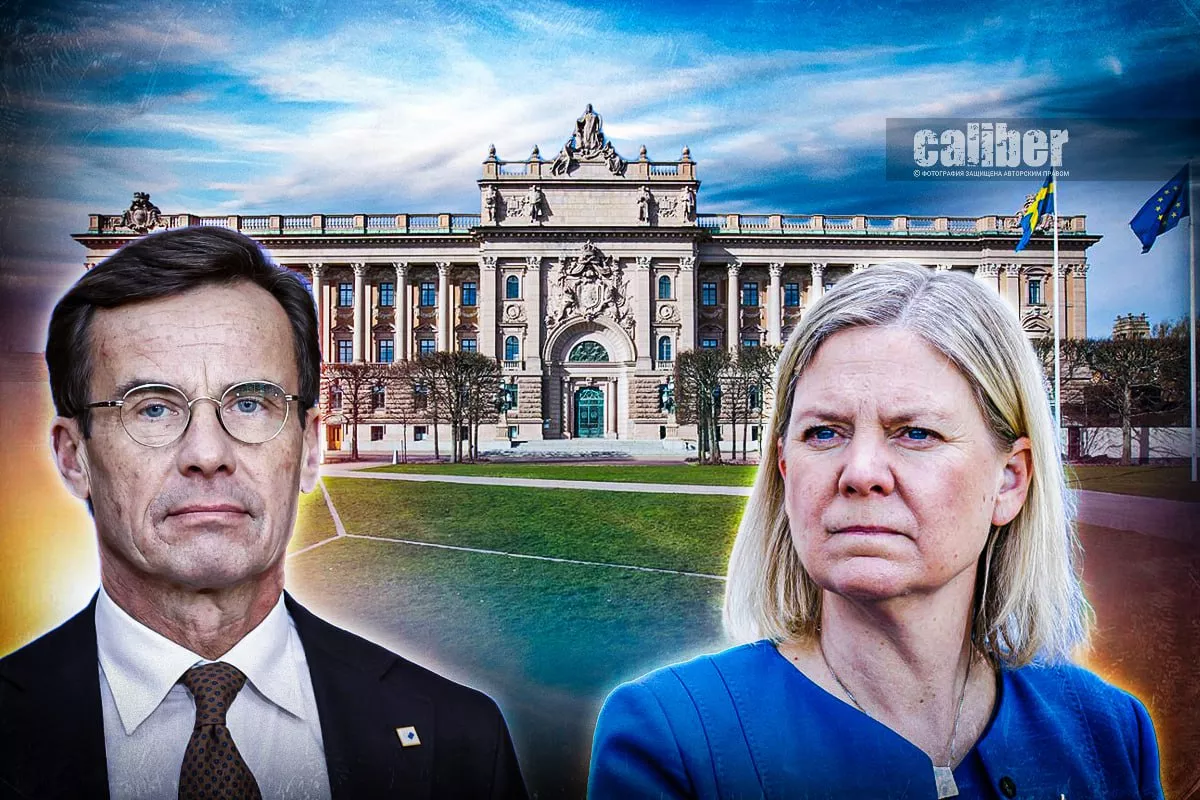
Sweden goes to the polls on 13 September for parliamentary, regional and municipal elections that could install a far-right party in government for the first time. Early voting opened on 26 August and the final surveys show a contest too close to call: a Novus poll published on 7 September put the centre-left opposition bloc on 50.3% against 47.9% for the governing centre-right alliance. The difference is well within the margin of error, and the result will hinge on whether the Liberals clear the 4% threshold required for seats in the Riksdag.
The numbers that will decide the outcome
Prime Minister Ulf Kristersson's Moderate Party has governed since 2022 as a minority administration dependent on the Sweden Democrats (SD) under a cooperation agreement that gave the party substantial policy influence. Kristersson has now promised that a renewed mandate would bring SD into cabinet with full portfolios, including the migration brief. That prospect has sharpened the campaign's dividing lines. The right campaigns on law and order, pointing to a dramatic drop in shootings, 48 incidents in the first eight months of 2026 compared with 391 for all of 2022, while the centre-left promises higher taxes on banks and top earners to fund healthcare, education and cost-of-living relief.
The Liberals have spent months teetering on the edge of parliamentary extinction. One early September survey recorded just 2.8% support, but the latest Novus reading lifted them to 4.3%, reviving the centre-right's arithmetic. If they fall short, a significant slice of centre-right votes is wasted, handing the advantage to Andersson's coalition of Social Democrats, Left Party, Greens and Centre Party. The SD, meanwhile, has consolidated its position as Sweden's second-largest party with 18.3% support in Statistics Sweden's May survey, behind only the Social Democrats.
A far-right party on the threshold of power
The Sweden Democrats' trajectory from parliamentary pariah to prospective cabinet member reflects a broader Nordic realignment. The party does not advocate EU withdrawal but seeks to curtail Brussels' competences and slow integration, a stance that sits uncomfortably with the European Commission's agenda. For EU institutions, a Swedish government that includes SD would strengthen the national-conservative faction in the Council, complicating legislative negotiations on migration, rule of law and climate policy. Yet the party's pragmatism on defence and Ukraine, it backed NATO accession and supports military aid to Kyiv, means the shift is not a clean break with the Atlanticist consensus.
Andersson's Social Democrats, by contrast, offer a platform of expanded public spending, green industrial policy and deeper European cooperation. Business groups have warned that the proposed tax increases on corporate profits, financial institutions and savings could dampen investment. The Confederation of Swedish Enterprise has argued that higher capital taxation risks undermining the competitiveness of export-oriented sectors at a moment when the euro-area economy remains fragile.
Migration rhetoric meets labour market reality
The government's flagship migration measure, offering up to 350,000 kronor for voluntary return, illustrates the tension between political signalling and economic necessity. Sweden faces acute labour shortages in healthcare, elderly care and municipal services, sectors where foreign-born workers are heavily represented. Any administration, regardless of complexion, will need to reconcile restrictive rhetoric with the reality that the welfare system depends on migrant labour. The OECD has repeatedly flagged Sweden's integration challenges alongside its demographic dependence on immigration, a contradiction that neither bloc has resolved.
Crime statistics and the political narrative
The government cites the decline in shootings as evidence that its tougher policing and sentencing regime works. Criminologists caution that the drop may reflect cyclical gang dynamics as much as policy, and that the absolute number of incidents remains high by historical standards. The opposition counters that sustainable safety requires investment in social services, youth outreach and community policing, funded by the tax rises the right rejects. Voters consistently rank living costs, healthcare queues and school quality above crime in issue salience trackers, suggesting the government's security focus may not match electorate priorities.
What Brussels is watching
The European Commission's interest in the outcome extends beyond migration policy. Sweden's 2024 NATO accession, its commitment to raise defence spending above 2% of GDP and its role as a major donor to Ukraine make it a linchpin of European security architecture. The EU is counting on integrating Swedish defence industrial capabilities, notably in submarines, fighter aircraft and artillery, into a continental framework designed to reduce reliance on the United States. A centre-left government would likely be more amenable to EU defence initiatives such as the European Defence Fund and permanent structured cooperation, while an SD-influenced cabinet might resist deeper military integration.
On migration, the Kristersson government's hardline approach aligns with the Commission's push to strengthen external borders and accelerate returns. But Brussels worries that unilateral national measures, temporary border controls, restrictive asylum interpretations, could erode Schengen. The SD's preference for national sovereignty over EU burden-sharing mechanisms adds another layer of friction. Meanwhile, Swedish public opinion remains firmly pro-European: 64.5% supported EU membership in a May 2026 survey, against 11.4% opposed, a figure that has barely shifted despite the polarised debate.
The day after: governing constraints
Whichever bloc prevails, the next prime minister will face a fragmented Riksdag where no combination commands an outright majority without cross-bloc cooperation. A centre-left government would need the Centre Party's support on economic policy and the Left Party's on social spending, partners with conflicting priorities on taxation and nuclear power. A centre-right administration with SD ministers would face internal tensions over EU policy, climate targets and the extent of migration restrictions compatible with labour market needs. Both scenarios point to unstable parliamentary arithmetic and frequent reliance on ad hoc majorities.
People mentioned
Organisations
Moderate Party · Sweden Democrats · Social Democratic Party · Left Party · Green Party · Centre Party