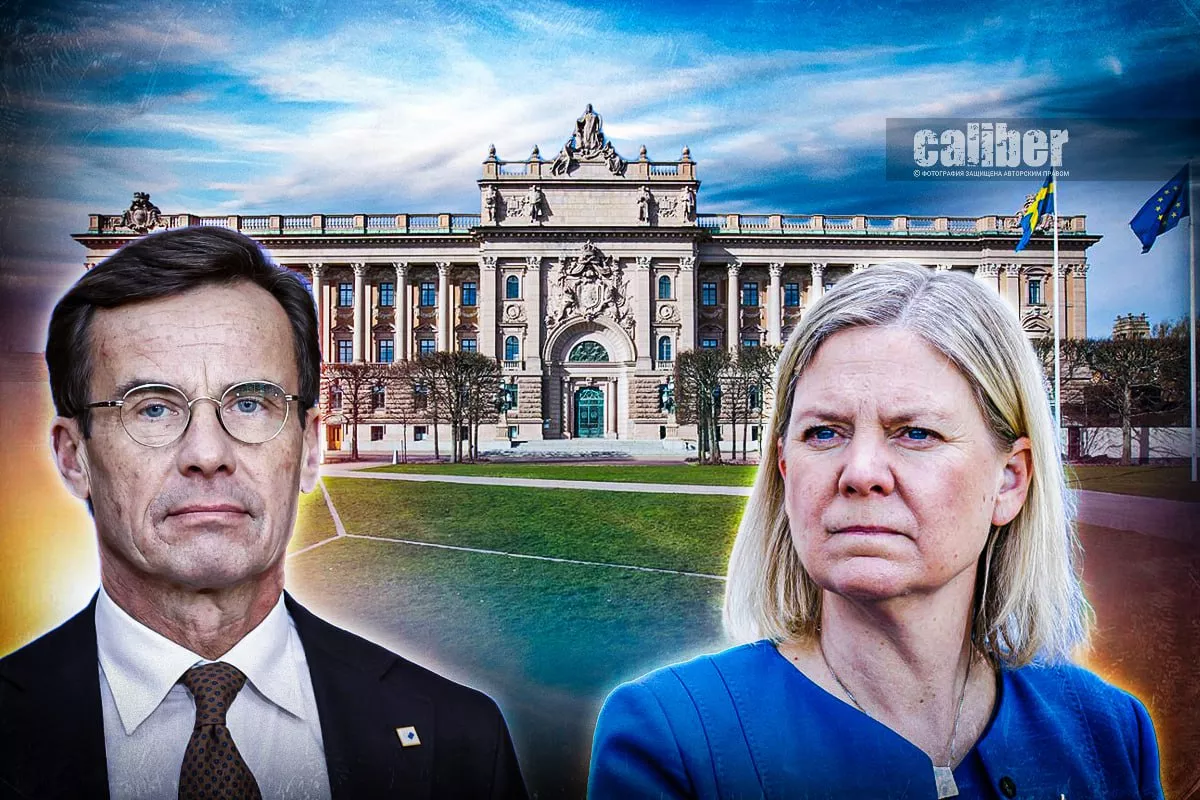
Sweden goes to the polls on 15 September with the Sweden Democrats polling at 22 percent, the party's highest sustained support since it entered the Riksdag in 2010 with 5.7 percent. The nationalist party, whose origins lie in the neo-Nazi fringe, now governs in coalition with the centre-right and sets the agenda on immigration and crime. Its trajectory mirrors a pattern visible from Madrid to Warsaw: parties once treated as democratic outliers have become kingmakers or governments themselves.
From white power to justice committee
Richard Jomshof embodies the Sweden Democrats' journey. A former high-school teacher, he helped steer the party away from explicit white-power activism at the turn of the century while preserving its anti-immigrant core. After the 2022 election he became chairman of the Parliamentary Justice Committee, which oversees courts, police and the criminal code. From that perch he pushed for harsher penalties for criminals with a "non-Swedish background" and warned of the "Islamisation of our homeland". Anti-Islamic cartoons on his website nearly cost him the chairmanship, but committee colleagues dismissed the accusations as mere "political yap". He later quit the committee in protest at a ban on private ownership of semi-automatic weapons.
Jomshof's recent book Kafir, the Arabic term for infidel, became a bestseller after saturation coverage across Swedish television, newspapers and websites. The publisher was small and previously obscure. The dynamic recalls Oscar Wilde's observation that the only thing worse than being talked about is not being talked about. Swedish media, in warning against Jomshof's generalisations, delivered his thesis to a mass audience.
AfD's Saxon laboratory
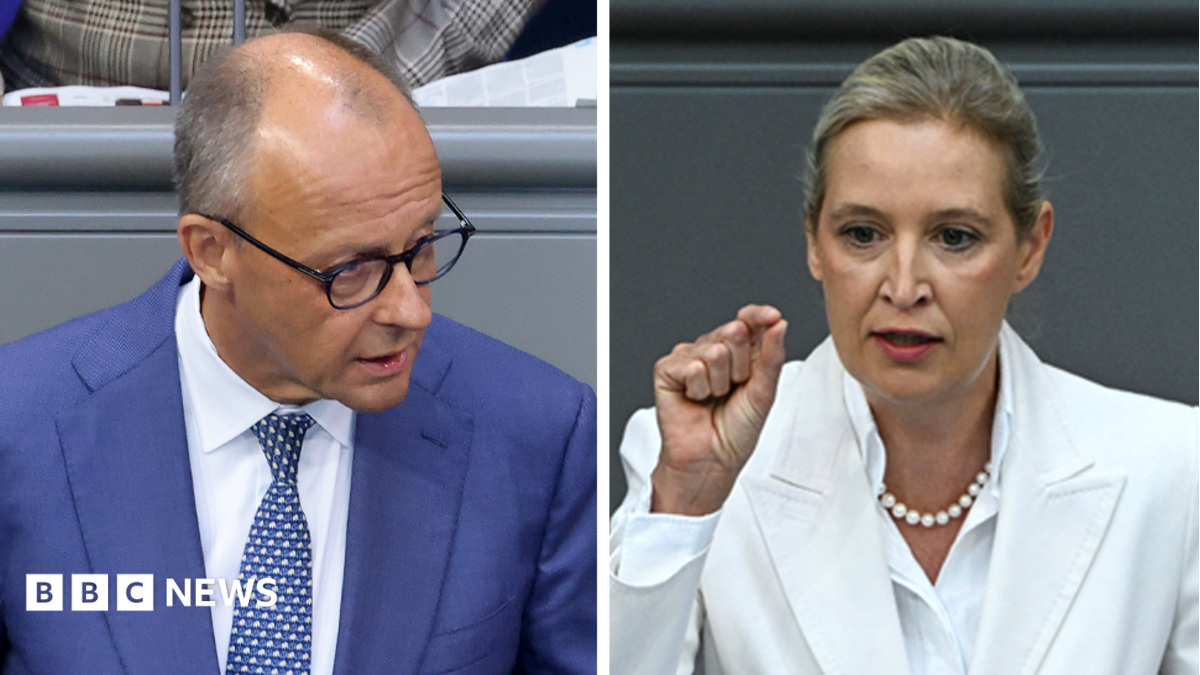
A similar dynamic propelled the Alternative for Germany (AfD) to a landslide in the Saxony-Anhalt state election. The state holds just three percent of Germany's population and records the second-lowest GDP per capita among the Länder. Yet the result sent shockwaves through Berlin. AfD's Saxony-Anhalt programme calls for purging "slander" of Germany from school curricula, defunding organisations that maintain Nazi terror sites, and closing the Bauhaus school in Dessau, a UNESCO World Heritage site. The party leadership has described Berlin's Holocaust memorial as a "national disgrace". Its slogan: "less Hitler, more Bismarck".
AfD has revived the term Völkisch, the Nazi-era concept denoting a racialised national community. The Saxony-Anhalt branch also champions Ostalgie, nostalgia for the communist German Democratic Republic, and opposes German military aid to Ukraine. The party's rise in the east is not abstract: since reunification in 1990, Saxony-Anhalt has lost 750,000 inhabitants, a quarter of its population, mostly skilled young people moving west. Unemployment rose as heavy industry shut down. Immigrants now make up roughly a tenth of the remaining population. The demographic vacuum has been filled by disappointment.
The economic substrate of nationalist voting
The correlation between industrial decline and far-right support is not unique to eastern Germany. In Sweden, the Sweden Democrats draw disproportionate support from rural municipalities and former industrial towns where public services have retreated. In Italy, Brothers of Italy dominates the south, where youth unemployment remains above 25 percent. In Poland, Law and Justice built its majority on social transfers to families and pensioners in the economically weaker east. The common thread is a perception, often grounded in reality, that the postwar social contract has frayed, and that mainstream parties offer only managed decline.
A continental pattern
The Swedish election on 15 September is the first of a cluster. France, Spain, Greece, Poland and Italy all face national votes within the next year. In France, the National Rally, founded in 1972 by former Waffen-SS member Jean-Marie Le Pen, has been rebranded but not fundamentally altered. Spain's Vox, launched in 2013 with funding from ultra-conservative lobbies such as HazteOír and CitizenGo, sits in regional governments. Greece's Golden Dawn was dissolved by the Supreme Court in 2020 after its leadership was convicted of running a criminal organisation, yet smaller parties have absorbed its agenda. Poland's Law and Justice, rooted in the Solidarność labour movement, governs on a platform of political Catholicism, anti-liberalism and Euroscepticism. Italy's Brothers of Italy, descended from the post-fascist Movimento Sociale Italiano, won two percent in 2013 and now leads at 27 percent with Giorgia Meloni as prime minister.
Media as accelerant
The Italian case of Roberto Vannacci illustrates how media attention converts notoriety into political capital. The general self-published Il mondo al contrario on Amazon in 2023. The defence minister said he had "discredited the Army, the Defence and the Constitution". The armed forces distanced themselves. Television networks nevertheless invited Vannacci to debate ministers and academics. He has since founded a political party. The mechanism is familiar: outrage generates clicks; clicks generate bookings; bookings generate legitimacy. Liberal outlets, in denouncing the provocation, become the distribution network.
Why the mainstream struggles to respond
Mainstream parties face a dilemma. Adopting nationalist rhetoric legitimises it and alienates their own base. Ignoring it cedes the ground to those willing to speak the unspeakable. The Sweden Democrats' entry into government followed years of a cordon sanitaire that collapsed when the centre-right calculated it needed their votes. In Germany, the CDU/CSU has ruled out coalitions with AfD at federal level, but the firewall is porous at municipal level. In Italy, Meloni's government includes ministers from parties that once celebrated Mussolini. The normalisation is incremental, each step justified as pragmatic necessity.
People mentioned
-
Richard Jomshof
Organisations
Sweden Democrats · Alternative for Germany (AfD) · Brothers of Italy · Vox · Law and Justice Party · European Parliament