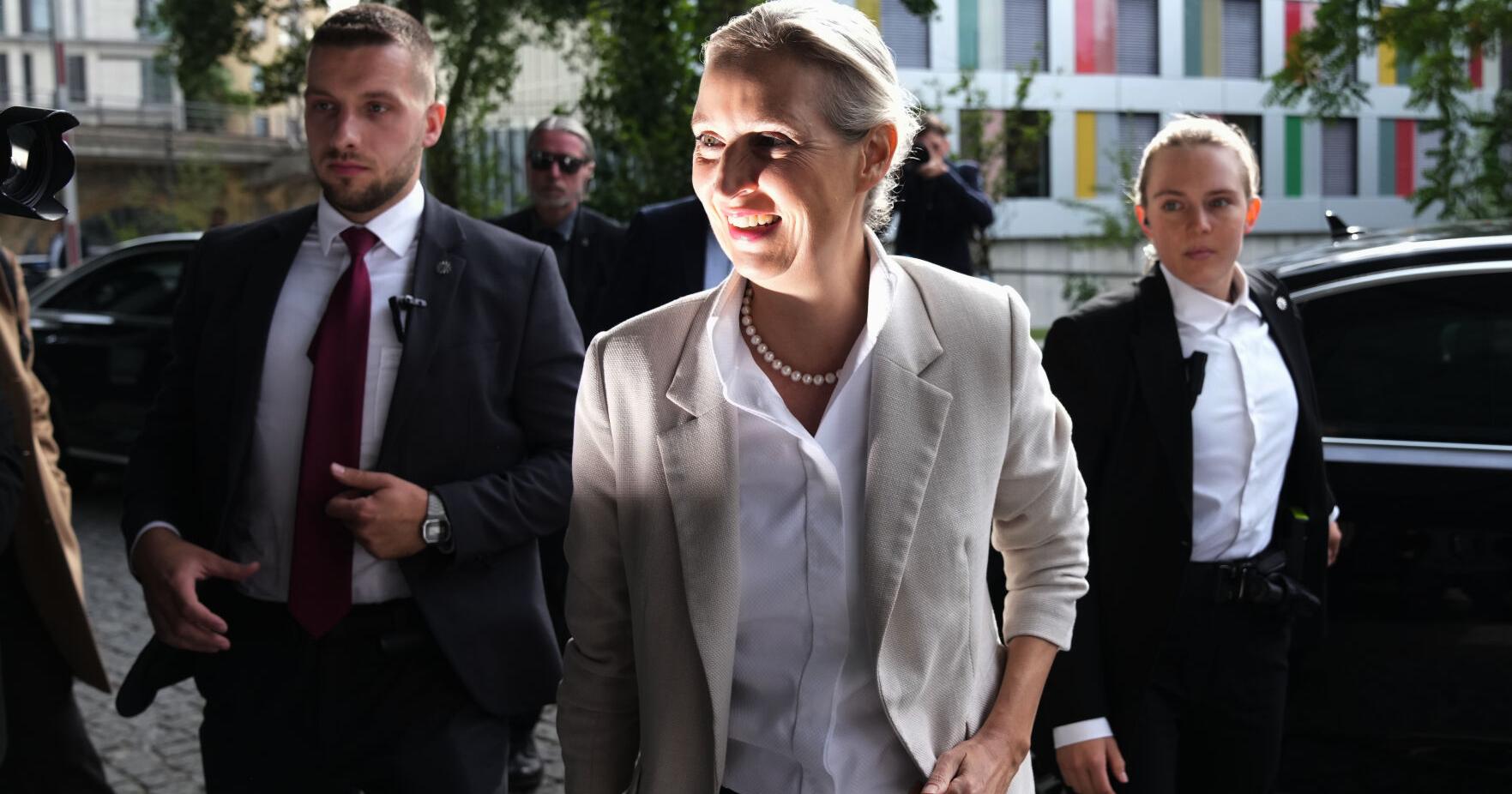
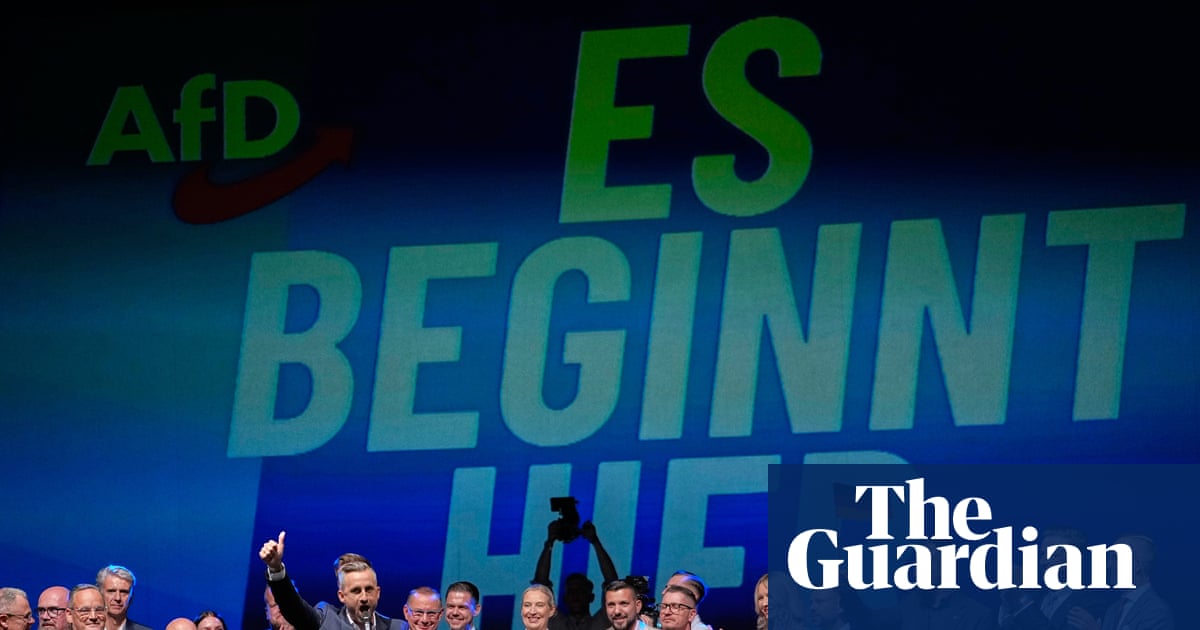
The Alternative for Germany (AfD) crossed a threshold on 1 September that had held since the Federal Republic was founded in 1949. The party took 43.8% of the vote in Saxony-Anhalt, securing 39 of the 83 seats in the Magdeburg parliament, three short of an absolute majority. It was the first time a far-right party had won a German state election outright since the war.
A result that reverberates beyond Magdeburg
The immediate economic consequences are limited. Saxony-Anhalt, Berlin and Mecklenburg-Western Pomerania together account for only around 8% of German GDP, and none of the likely election outcomes would alter the national balance of power, provided the federal coalition survives. But Oxford Economics argues the symbolism matters. The result reinforces what its economist Alexander Valentin calls an "already dramatic erosion of support" for Chancellor Friedrich Merz, whose Christian Democratic Union (CDU) saw its vote share collapse from 37.1% in 2021 to 17.2%.
Nationally, the AfD now polls at 27%, six points ahead of the CDU/CSU bloc on 21%. That gap, if it persists, complicates the arithmetic for any future federal government. The traffic-light coalition of Social Democrats, Greens and Free Democrats already governs without a majority in the Bundesrat, the upper house representing the states. A strengthening AfD in eastern state parliaments makes it harder to pass legislation requiring Bundesrat approval, including constitutional changes and many economic reforms.
Oxford Economics revises its risk assessment
Valentin was explicit about the transmission mechanism. "We see an increasing risk of a political stalemate at the national level that would derail necessary reforms and could prompt us to revise Germany's potential growth downwards," he said. The firm has not yet published a new figure, but the direction of travel is clear. Potential growth, the rate an economy can sustain without generating inflation, depends on labour supply, capital investment and productivity. All three are sensitive to policy choices on immigration, pensions, infrastructure, education and competition law.
Germany's potential growth has already been marked down repeatedly since the pandemic. The Bundesbank's most recent estimate, published in June 2026, put it at 0.6% annually for the period to 2028, down from 1.2% in the pre-crisis decade. The OECD and the European Commission have produced similar numbers. A further cut would have direct consequences for fiscal planning, since the debt brake ties structural deficit limits to potential output. It would also affect the European Central Bank's assessment of the euro area's supply side.
Reform agenda at stake
The reforms Valentin has in mind include the skilled-worker immigration law passed in 2023 but still not fully implemented, the pension package that raises the retirement age gradually to 67 by 2031, and the corporate tax overhaul that the traffic-light coalition agreed in principle but has not legislated. Each requires either Bundesrat consent or a stable parliamentary majority willing to stare down interest groups. The AfD opposes all three. Its state-level gains give it blocking minorities in some state governments, and its national polling makes a grand coalition between CDU/CSU and SPD, the traditional fallback, mathematically difficult without the Greens or the Free Democrats.
Merz's authority is the immediate casualty. He became chancellor in December 2025 after the CDU/CSU won the federal election on a platform of economic renewal. His personal ratings have fallen steadily since. The Saxony-Anhalt result, in a state the CDU governed from 1990 to 2021, suggests the party's eastern firewall has collapsed. That matters for the CDU's own positioning: if the party concludes it cannot win back AfD voters by moving right, it may tack toward the centre, altering the coalition calculus for 2029.
Corporate exposure in the east
Volkswagen and Intel illustrate the economic stakes. Volkswagen employs roughly 18,000 people across its plants in Zwickau, Chemnitz and Dresden, all in Saxony. The company's €135 billion investment plan through 2030 includes battery production and software development in the region. Intel's €30 billion Magdeburg fab, the largest single foreign investment in post-reunification Germany, sits in Saxony-Anhalt itself. Both projects rely on skilled migration, planning certainty and a functional relationship between state and federal authorities.
Neither company has commented publicly on the election. But business associations have warned that political instability in the east complicates recruitment and supply-chain planning. The Federation of German Industries (BDI) said in a statement on 3 September that "investment decisions require reliable framework conditions across legislative periods." The AfD's platform includes withdrawal from the euro, exit from the EU single market and restrictions on foreign ownership of critical infrastructure, positions that, if implemented, would directly affect both companies.
Why the Bundesrat matters
Germany's federal structure amplifies state election results. The Bundesrat's 69 votes are distributed by state population, but each state casts its votes as a block. Governments that include the AfD, currently none, since all other parties maintain a "firewall" against cooperation, would likely abstain or vote against federal legislation. That reduces the effective majority for any bill requiring Bundesrat consent. With the AfD now the largest party in Thuringia, second in Saxony and Brandenburg, and first in Saxony-Anhalt, the number of states where coalition-building excludes the AfD is shrinking.
The next test comes in 2027, when Mecklenburg-Western Pomerania and Berlin hold state elections. Berlin's government already relies on a CDU-SPD coalition that excludes the Greens. If the AfD repeats its Saxony-Anhalt performance there, the capital's administration could face paralysis. That would be a symbolic blow: Berlin generates 5% of national GDP and hosts the federal government.
People mentioned
-
Alexander Valentin
Organisations
Oxford Economics · Alternative for Germany (AfD) · Christian Democratic Union (CDU) · Volkswagen · Intel