When Swedes vote on Sunday, they will decide whether to keep the centre-right coalition that has governed with far-right support since 2022. The polls give the centre-left opposition a narrow edge. Even if that holds, the Sweden Democrats have already reshaped the country's politics in ways that will not be reversed by a single election result.
A coalition that normalised the far right
Prime Minister Ulf Kristersson's minority government has depended on the Sweden Democrats from the start. What distinguished this arrangement from earlier European examples was its openness: the Sweden Democrats did not merely tolerate the government from outside, they drove its agenda on migration and criminal justice, linking the two at every turn. Now Kristersson has gone further, offering the party actual ministerial posts if the coalition is returned to office. It is the first time a Swedish prime minister has made such an offer to the far right.
The offer itself tells you something about how far the Overton window has moved. A party founded in 1988 with roots in white nationalism is being treated as a conventional governing partner, and the policy record shows why its leaders feel entitled to that status.
Policy changes that stuck
The most visible shifts have been on migration. Sweden's annual refugee quota has been slashed from 5,000 to 900. Residency permits can now be revoked on grounds of ill-defined "bad behaviour". The government has introduced financial incentives, running to tens of thousands of euros, to encourage migrants to leave voluntarily. Most asylum seekers are now barred from obtaining permanent residency altogether.
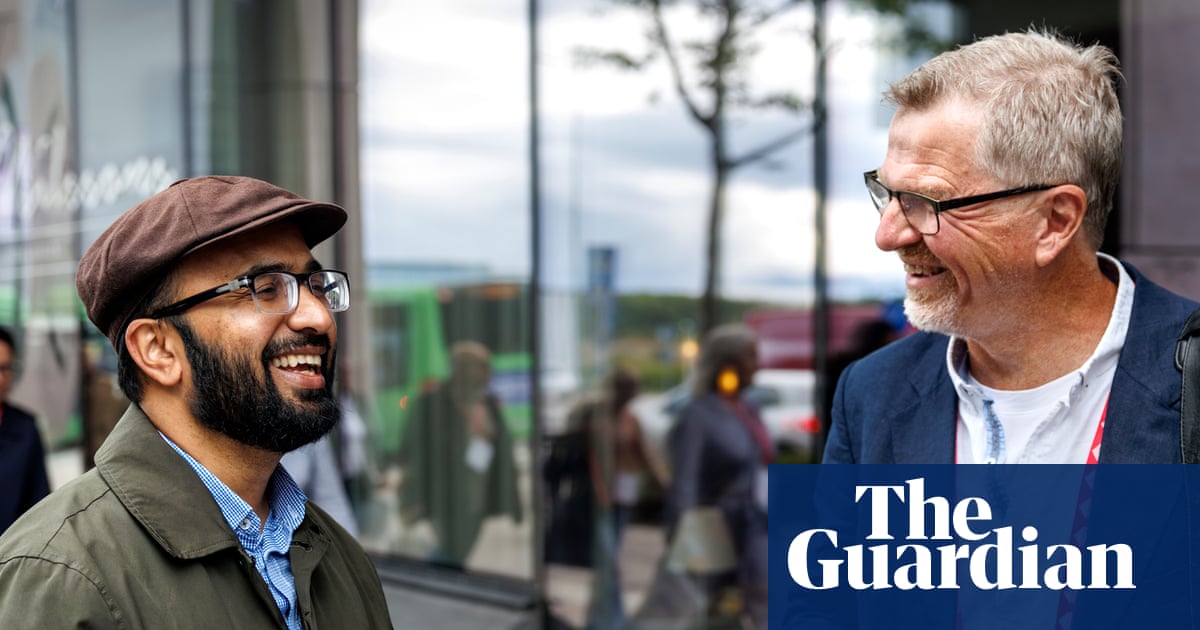
What makes these measures harder to reverse is that they have not been contested solely by the governing right. The Social Democrats, Sweden's main opposition party, have themselves voted with the right on migration and crime bills. Munir Niazi, who helps run the Ask-a-Muslim street outreach campaign, puts it plainly: the country is not going back to the policies of the 1980s and 1990s. Kashif Virk, the imam who founded that campaign, notes that politicians across the spectrum "play the anti-Islam card when they need it".
Conversations on the street
Virk started Ask-a-Muslim in 2017. Since then, volunteers from the Ahmadi Muslim community have set up stalls at more than 150 markets and squares, inviting passers-by to ask whatever they want about Islam. The premise is simple: personal contact can puncture the distortions spread by extremist parties. Virk says most Swedes are friendly and curious, though some respond with hostility.
That hostility has found institutional expression. In 2023, Sweden contended with a series of public incidents in which copies of the Qur'an were burned or damaged, provoking diplomatic fallout far beyond its borders. Mosques have been vandalised repeatedly. Last year, a gunman killed ten people in the city of Örebro, most of them from immigrant backgrounds.
The personal calculus of belonging
In Malmö, the politics has become intimate. A 46-year-old nurse, originally from Lebanon and resident in Sweden since 1999, told reporters that when the far right discuss her religion and her hijab, "it feels like they're talking about an animal". She still hears older colleagues at the hospital say that immigrants helped build the country. The far right, she said, does not see that.
Onyango, a 42-year-old Kenyan national who has spent nine years working in supply chains in Sweden, described the atmosphere as "horrible" for migrants. He is making contingency plans: setting aside money, considering an apartment in Nairobi. His friend Waithira, 30, said the same thing from a different angle. Before, she wanted to buy property and start a business in Sweden. Now she thinks twice. Neither of them is waiting to be told to leave; they are adjusting their expectations downward in real time.
Asylum seekers trapped in limbo
The damage extends well beyond legal residents. Refugees Welcome Stockholm, an organisation formed in 2015 when roughly 1,700 volunteers turned up at the central station to greet arriving Syrian and Afghan asylum seekers, has watched its funding and reach shrink as the political climate turned. Isaac Kuehnle-Nelson says the group has gone from shaping public debate to operating on the margins.
Jonna Mannberg points out that many of the people they helped in 2015 are still in Sweden, still without legal status. She describes a recent programming course for young undocumented asylum seekers where participants could not physically get out of bed. Healthy men in their twenties, pushed so far down they could not imagine a future. One 14-year-old, born in Sweden, is facing deportation to Armenia, a country he has never visited, whose language he does not speak, and where compulsory military service awaits him. His mother's asylum claim became bogged down in bureaucracy after his parents separated. A visa category that might have given the family another path was scrapped by the current government.
A breaking point for Muslim Sweden
Bilan Osman, who has spent years researching rightwing extremism, argues that the far right has built its own media infrastructure to reach new audiences, steadily normalising rhetoric that blames migrants and minorities for Sweden's social problems while the country's rising inequality receives far less attention. The result, she says, is a Sweden where some people belong and others are made to feel they do not.
With Muslims making up roughly 8% of the population, the question of whether they have a future in Sweden is no longer abstract. Osman frames it directly: if the current discourse continues, many Muslims will conclude there is no future for them in the country.
People mentioned
-
Kashif Virk
-
Munir Niazi
-
Bilan Osman
-
Jonna Mannberg
-
Isaac Kuehnle-Nelson
Organisations
Sweden Democrats · Refugees Welcome Stockholm